





Sleep apnea is a sleep disorder in which a temporary stoppage of breathing occurs during your night due to a blocked airway (Obstructive Sleep Apnea) or as a response to your brain not sending your lungs the signal to breathe (Central Sleep Apnea). Sleep apnea could also be a combination of Obstructive Sleep Apnea and Central Sleep Apnea, coined Complex Sleep Apnea. Let's break down the three main types of sleep apnea.
What Is Obstructive Sleep Apnea?
When you have Obstructive Sleep Apnea (OSA), the muscles in your mouth and throat relax and loosen while you sleep. In some cases, these tissues can fall back into your throat and mouth, blocking the passage of air to your lungs. As a result, your body doesn't get the oxygen it needs, causing you to wake up. The process repeats numerous times throughout the night, and because of this, you don't achieve the restful and productive sleep you need.
What Is Central Sleep Apnea?
Instead of a blockage preventing oxygen from reaching your lungs, with Central Sleep Apnea (CSA), your brain doesn't send the signal to breathe. When your brain doesn't tell your lungs to draw a breath, you will wake up, oftentimes gasping for air. This will continue to happen throughout the night and cause you to wake up feeling unrested and groggy. Central Sleep Apnea is typically found in people with cardiac issues or those on heavy doses of opiate medications and is not nearly as prevalent as Obstructive Sleep Apnea.
What Is Complex Sleep Apnea?
Complex Sleep Apnea is a condition in which both Central and Obstructive Sleep Apnea happen simultaneously. With Complex Sleep Apnea, you get a "double-whammy" as you struggle with a blocked airway while also failing to get the signal to breathe. Of the three forms of sleep apnea, Complex Sleep Apnea is the least common and was first discovered in 2006.
How Is Obstructive Sleep Apnea Different From Snoring?
Many often point to snoring as a sure sign that a person has sleep apnea, but snoring differs from sleep apnea in several key ways.
- Snoring is caused by vibrations of the mouth and throat's soft tissues as air circulates while you are asleep.
- A common association occurs between snoring and having sleep apnea. However, sleep apnea results from a complete blockage of the airway, cutting off oxygen to the lungs while snoring does not.
- Those with sleep apnea often experience unsafe drops in blood oxygen levels during the night while those who snore do not experience a similar drop in blood oxygen.
Sleep Apnea Symptoms
Symptoms of Obstructive Sleep Apnea:
- Loud Snoring
- Difficulty Staying Asleep
- Morning Headaches
- Frequent Need to Urinate Throughout the Night
- Daytime Fatigue
- Falling Asleep Throughout the Day
- Getting Your Recommended Hours of Sleep but Still Feeling Tired
- Difficulty Concentrating or Focusing
Symptoms of Central Sleep Apnea:
- Difficulty Staying Asleep
- Morning Headaches
- Frequent Need to Urinate Throughout the Night
- Shortness of Breath Throughout the Night
- Extended Periods of Not Breathing
- Extreme Daytime Fatigue
Sleep Well, Live Well
Our home sleep test brings expert diagnosis right to your doorstep, so you can start your journey back to the vibrant world of great sleep.
✗ No labs
✗ No wires
✓ Just sleep

Sleep Apnea Causes
What Causes Obstructive Sleep Apnea?
- Obesity
- Genetics
- Age
- Post-Menopausal Women
- Smoking
- Alcohol Use
Your genetics play an important role in the development of Obstructive Sleep Apnea. As a result of genetics, you could be born with a larger neck size and in turn, can have excess tissue in your mouth and throat. With OSA, the muscles that support your uvula, tonsils, tongue, and sidewalls of your throat relax and cause interruptions in your breathing.
What Causes Central Sleep Apnea?
CSA occurs over time from conditions such as heart failure or a stroke. Let’s break down the conditions that can lead to the development of Central Sleep Apnea:
Opioid Medication. Opiate medication increases your risk of developing Central Sleep Apnea because your brain will fail to send the signal that it is time to take a breath.
Cheyne-Stokes Breathing. Typically found in those with heart failure or stroke, Cheyne-Stokes Breathing is the leading CSA cause. It is characterized by a gradual decrease in your breathing effort over the course of the night and followed by periods of quick, shallow breathing called hyperpnea. With Cheyne-Stokes Breathing, your breath becomes shallow, quiet, and soft until it stops altogether. After your breathing stops, it will be followed by hyperventilation or quick shallow breathing that represents the standard pattern of Cheyne-Stokes Respiration.
High Altitudes. Those living in or visiting a high-altitude environment may notice that higher elevations induce Cheyne-Stokes Breathing. The changes in the air lead to a pattern of breathing that resembles Cheyne-Stokes Respiration called Periodic Breathing. Periodic Breathing is defined as a grouping or cluster of breaths split up by intervals of apneas, which are periods of not breathing.
What Causes Complex Sleep Apnea?
Complex Sleep Apnea is a new condition in the sleep apnea world and extensive research is taking place. If you have treatment-resistant sleep apnea, it may be worth investigating with your doctor to see if Complex Sleep Apnea may be a factor. Complex Sleep Apnea is basically a combination of Obstructive Sleep Apnea and Central Sleep Apnea and can occur in several different scenarios such as if a person has OSA and is prescribed a CPAP, then CSA may emerge.
Sleep Apnea Risk Factors
Obstructive Sleep Apnea
- Excess Weight. Sleep apnea is often more common in people that are overweight or obese. Weight increases can lead to excess tissue development in the mouth and throat and cause airway blockages.
- Neck Circumference. Anyone with a larger neck circumference often has a smaller airway, making it difficult for air to pass.
- Narrowed Airway. If you're born with a smaller airway, it's a lot easier to develop airway blockages that prevent oxygen from reaching your lungs. If you still have your tonsils and adenoids, this can also be a contributing factor. A narrowed airway can also lead to sleep apnea in children.
- Gender. Men are two to three times more likely to develop Obstructive Sleep Apnea than women. However, the risk increases in women if they are overweight or have gone through menopause.
- Age. Older adults are more likely to develop Obstructive Sleep Apnea than younger people because fatty deposits in the parapharyngeal area between the head and neck increases with age along with the lengthening of the soft palate, which is located in the back of the roof of the mouth.
- Smoking. Smoking causes inflammation of the mouth and throat and increases the likelihood of fluid retention.
- Nasal Congestion. If you're experiencing nasal congestion, it can be more difficult for air to pass through your nose. As an alternative, you can try breathing through your mouth or talking to your doctor about ways to clear up your congestion.
- Alcohol Use. Consuming alcohol relaxes your muscles, which also includes the muscle tissues in your airway. When you drink alcohol, your arousal response is reduced, which results in you not waking up as easily when apnea events occur.
- Certain Sleep Medications. Sleep medications like benzodiazepines cause sedation, which like alcohol, causes your muscles to relax like the ones in the back of your throat, resulting in obstructions in your airway.
Central Sleep Apnea
Like OSA, those with Central Sleep Apnea carry the same risk factors associated with gender and age.
- Opioid Medication. This medication can increase your risk of Central Sleep Apnea by affecting your brainstem, which controls your body’s automatic function such as breathing.
- Heart Disorders. Having congestive heart failure or other severe cardiac conditions can increase the Central Sleep Apnea risk.
- Stroke. If you've had a stroke in the past, your likelihood of developing Central Sleep Apnea increases.
Sleep Apnea Complications
Sleep apnea can cause or impact other chronic conditions within the human body. If you have sleep apnea, you could experience these complications:
- High Blood Pressure. If you struggle with high blood pressure and lifestyle choices alone aren’t helping to get it under control, treating your sleep apnea can help. When your sleep apnea is untreated, you may experience high blood pressure due to the rapid drop in blood oxygen during sleep. Keeping oxygen levels steady throughout the night keeps your heart from overworking and your blood pressure down.
- Falling Asleep Throughout the Day. It's common for anyone who struggles with sleep apnea to fall asleep easily throughout the day, which can happen when watching television, reading, or doing mundane daily tasks. For this reason, certain federal agencies require truckers and pilots to comply with CPAP therapy to maintain their license.
- Type 2 Diabetes. Diabetes can develop from insulin resistance aided by the onset of sleep apnea. Treating your sleep apnea can reduce this risk.
- Difficult Surgery Recovery. Recovering from surgery may mean you need to sleep on your back, which can compromise your position when you struggle with Obstructive Sleep Apnea.
- Liver Problems: Sleep apnea can cause liver damage not related to alcoholism and can also lead to conditions like developing a fatty liver
Sleep Apnea Diagnosis
Based on your symptoms and sleep history, your doctor will likely prescribe a sleep study. A sleep study involves overnight monitoring of your breathing and body functions. There are two types of sleep studies:
- Nocturnal Polysomnography. During this test, you’ll spend the night in a hospital or a sleep disorder center, so that doctors can monitor your heart, lungs, brain activity, breathing patterns, arm and leg movements, and blood oxygen levels.
- Home Sleep Tests. A newer method to collect sleep data is utilizing a home sleep study. With the home sleep test, you’ll sleep in the comfort of your own bed with a small machine to measure your heart rate, blood oxygen level, airflow, and breathing patterns. Your doctor will either have you mail back your home sleep test machine and collect your data manually, or your sleep test will automatically upload your data to a patient portal and alert your doctor when it’s ready to review.
If your results are abnormal, your doctor may prescribe PAP therapy without further testing. However, your doctor may require further evaluation and refer you to an ear, nose, and throat doctor to rule out a blockage in your nose or throat. Alternatively, if your doctor suspects you have Central Sleep Apnea, you may be referred to a cardiologist or neurologist for further evaluation.
Sleep Apnea Treatment
Sleep apnea treatment will vary depending on the severity of your diagnosis. For milder cases of Obstructive Sleep Apnea, your doctor may recommend lifestyle changes such as quitting smoking, losing weight, or treating nasal allergies. If lifestyle changes do not improve your symptoms or are diagnosed with moderate to severe Obstructive or Central Sleep Apnea, there are many treatment options available to you. It’s crucial you find the right treatment that’s personalized for you.
Mild to Moderate Obstructive Sleep Apnea Treatment
Lifestyle changes may be enough to improve very mild cases of sleep apnea, however, there are other non-invasive devices on the market to help improve your symptoms as well. Even in milder cases of sleep apnea, doctors will sometimes prescribe PAP therapy.
Oral Appliances
Designed to keep your throat open, oral appliances are defined as custom-fit dental devices to wear while you sleep. Some devices slide your lower jaw forward to create extra space at the back of the throat, helping to open your upper airway. You can try various oral appliances to treat mild sleep apnea by working with your dentist to find the one that best fits you. After securing the right device for you, you’ll need to schedule regular follow-ups with your dentist throughout your first year of use to ensure that the fit is still secure. However, if you have over 30 apnea events per hour, that is classified as severe OSA, but PAP therapy is still the recommended treatment.
Positional Therapy
Many people who snore or suffer from mild sleep apnea may have positional sleep apnea, which is sleep apnea that responds positively to a change from sleeping on your back to your side. When you sleep on your back, gravity pulls your tongue and loose, untoned tissue to the back of your throat, creating a flap or obstruction, which causes difficulty breathing and increases apneas. With positional therapy, moving to a side sleeping position prevents your tongue and loose tissue from falling back and blocking your airway, reducing apnea events by 50% or more. For positional therapy treatment there are a few options:
- Soft devices with a foam noodle that attaches to your back and helps keep you situated on your side
- Devices that monitor for sounds such as snoring or gasping can be placed under your pillow and will gently raise you if it detects snoring to help unblock your airways
- Finally, vibrating devices that are worn around your abdomen, which track your sleep position and vibrate when you try to roll onto your back
EPAP therapy
EPAP stands for Expiratory Positive Airway Pressure and refers to treatments that use your own exhaled breath to create the pressure needed to open your airway. EPAP works by using small nose cones to create a seal around your nostrils. The nose cones feature built-in valves that capture your exhaled air to create the pressure needed to keep your airway open. However, if you breathe through your mouth, this solution probably won’t work for you since the device depends on exhaling through your nose to create air pressure. Dr. Barone explains that recently, EPAP therapy hasn’t been highly favored by doctors.
Weight Loss
Some overweight or obese individuals may see an improvement or even the complete elimination of their apneas if they drop excess weight and reduce their BMIs. Losing weight may mean losing neck circumference and excess fatty tissue in the throat. However, there is no guarantee that losing weight will rid your sleep apnea.
Tongue Training
To treat mild sleep apnea or snoring, tongue training has emerged, which provides electrical impulses to your tongue over the span of a few weeks to strengthen the muscles and help train your airway to not collapse. This treatment helps with mild cases of OSA and those who snore. Talk to your doctor to see if this would be a treatment option for you.
Moderate to Severe Obstructive Sleep Apnea Treatment: PAP Therapy
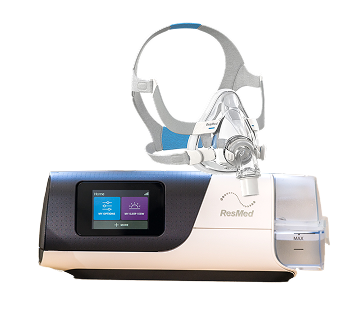
Positive Airway Pressure (PAP) treatment is among the most common and least invasive treatment options. When you breathe in, the pressurized air opens your airway, allowing the air to reach your lungs. All forms of PAP machines work this way. There are three different types of PAP machines: CPAP, APAP, and BiPAP (BiLevel). However, the machines differ from one another in the way they provide pressure.
CPAP Machines
CPAP is an acronym that stands for Continuous Positive Airway Pressure. CPAP machines are programmed with one set pressure and cannot change the amount of pressure on their own.
APAP Machines
APAP stands for Automatic Positive Airway Pressure. Unlike CPAP machines that deliver therapy air at one set pressure, APAP machines analyze your breathing and automatically adjust to provide you with the minimum pressure you need. APAP machines adjust throughout the night to ensure you always get exactly the right amount of pressure for you. For this reason, APAP machines are the preferred way to treat sleep apnea.
BiPAP (BiLevel) Machines
BiPAP stands for BiLevel Positive Airway Pressure. BiPAP machines use two different set pressures— one for when you inhale and one for when you exhale. The exhale pressure is lower than the inhale pressure and is designed to increase your comfort by making it easier to breathe out. Some BiPAP machines can choose the pressures automatically, which are referred to as Auto BiLevel machines. BiPAPs are most often prescribed to those with Complex Sleep Apnea (CSA), and only your doctor will know if a BiPAP is right for you. For most people that experience OSA, an APAP or a CPAP machine would be ideal.
Invasive Obstructive Sleep Apnea Treatment Options
You may be wondering what surgical treatment options are available for sleep apnea. Due to the success of non-invasive sleep apnea treatment options, surgery is usually used as a last resort after all other possible routes have failed. Typically, before surgery, you’ll need to have completed a three-month trial of other non-invasive treatment options. However, for those diagnosed with sleep apnea who have specific jaw structure problems, surgery is sometimes the best option.
Surgical Options Include:
- Tissue Removal (Uvulopalatopharyngoplasty). This method targets the rear of the roof of your mouth. In this procedure, the doctor removes and repositions excess tissue in your throat to enlarge your airway. They may also trim your soft palate or uvula, remove your tonsils, or reposition some of the soft palate muscles. While this is the most popular sleep apnea surgery, it is not likely to cure moderate to severe sleep apnea.
- Tissue Shrinkage (Radiofrequency Volumetric Tissue Reduction). This procedure is typically used to treat mild to moderate sleep apnea. It involves shrinking the tissue near the back of your mouth and throat using radiofrequency energy. A study found that this worked similar to tissue removal but with fewer surgical risks.
- Jaw Repositioning (Maxillomandibular Advancement). With this method, your jaw is shifted forward, allowing for more space behind your tongue and soft palate, helping to decrease the potential for obstructions.
- Palatal Implants. For this procedure, fiber rods are implanted into your soft palate to help strengthen the tissue and prevent airway blockage. This is most effective for people who snore or have mild sleep apnea.
- Septoplasty and Turbinate Reduction. These two surgical procedures open your nasal passages to improve airflow. If you have a bent or deviated septum, a Septoplasty procedure divides and separates the two nasal sides. A Turbinate Reduction either removes or reduces the nose's curved sides that can block your nasal passages.
- Genioglossus Advancement. If you are experiencing sleep apnea, your tongue can fall into your throat and block your breathing. This procedure positions your major tongue attachment forward, which allows for breathing behind the tongue. The surgery results in a cut in your lower jaw where your tongue attaches and the small piece of bone is shifted forward.
- Hyoid Suspension. Your hyoid bone is the U-shaped bone in your neck attached to your tongue and epiglottis. With this procedure, the space in the lower part of the throat is enlarged by pulling the hyoid bone forward and locking it in place.
- Creation of a New Air Passageway (Tracheostomy). The most invasive surgery used in severe and life-threatening sleep apnea cases, this procedure involves inserting a hollow breathing tube into your windpipe in your lower neck. You can plug the tube during the day to breathe and speak normally, but the tube can be opened at night to allow for breathing without any blockages to your throat.
Central Sleep Apnea Treatment
With Central Sleep Apnea (CSA), the first step in the treatment process is to often take a look at your underlying or previous health conditions to determine the possible causes of your Central Sleep Apnea. When you treat such health conditions as Congestive Heart Failure, you have a greater chance of improving your Central Sleep Apnea.
Other Central Sleep Apnea Treatments Include:
- Talk to Your Doctor About Your Opioid Medications. Check with your doctor regarding if your opioid medication use is causing your Central Sleep Apnea. If so, your doctor may reduce your medication dosage to reduce your Central Sleep Apnea.
- Continuous Positive Airway Pressure (CPAP Therapy). As with OSA, CPAP therapy could help treat your Central Sleep Apnea. CPAP therapy uses continuous air at a prescribed pressure to keep your airway open while you sleep, which treats your Central Sleep Apnea.
- BiLevel Positive Airway Pressure (BiPAP). BiPAP therapy could be a possible treatment for Central Sleep Apnea if you do not have other health conditions such as heart failure. A BiPAP machine supplies air at two different pressure settings: a set pressure when you breathe in and a set pressure when you breathe out. With BiPAP therapy, if the machine registers that you haven’t taken a breath in a certain amount of time, the machine will supply you with oxygen.
- Adaptive Servo-Ventilation (ASV). An alternative to CPAP therapy, Adaptive Servo-Ventilation (ASV) therapy supplies therapy air to treat Central Sleep Apnea. ASV machines adjust the air pressure on a breath-by-breath basis. Like BiPAP therapy, if you have not taken a breath for a certain amount of seconds, the ASV machines will deliver you with therapy air to help you breathe. If you have heart failure, ASV therapy is also not recommended.
Complex Sleep Apnea Treatment
Generally, Complex Sleep Apnea (CompSAS) will iron out on its own, meaning the first line of treatment for CompSAS is often time. Your doctor may first wait to see if the problem resolves on its own. If not, your doctor may determine that it is time to try BiPAP or ASV therapy. You may also need to have a titration study conducted to set your optimal pressure settings.
With proper treatment, good sleep is right around the corner. Learning all that you can about your sleep apnea diagnosis puts you as your therapy advocate. Have any more questions? Leave them in the comments below, so we can help you get on your way to the sweet dreams you deserve.