Manufactured by CareFusion.
Item #TMS-09ADJ
Have a question? Call us!
1-800-356-5221(Mon-Fri 8AM-10PM CST, Sat 8AM-6PM CST)If you are a mouth breather, you can wear most masks with a few adaptations. The nasal pillow, nasal prong or nasal mask can be worn with a chinstrap. A full face mask or hybrid mask can be used without a chinstrap because the seal covers your nose and mouth. A full face mask will allow you to breathe through your mouth or through your nose.
If you have or develop chronic sinus problems, a full face mask or an oral face mask are the ones to try. Oral masks work best for mouth breathers with blocked nasal passages. You must use a heated humidifier with the oral mask. CPAP.com sells the Oracle HC452 Oral CPAP mask.
If you are a mouth breather who does not want to or cannot wear a chinstrap, please see our recommended masks for Mouth Breathers.
Nasal delivery devices are the preferred mode of delivering CPAP air. They are smaller, lighter and usually more comfortable, with many styles and sizes to choose from.
When using a nasal device with a CPAP, it is imperative that the mouth remain closed for the pressure to be maintained and the therapy to be effective. Most people will automatically keep their mouth closed while on CPAP, but some are unable to do so, at least in the beginning of the therapy.
Use of a
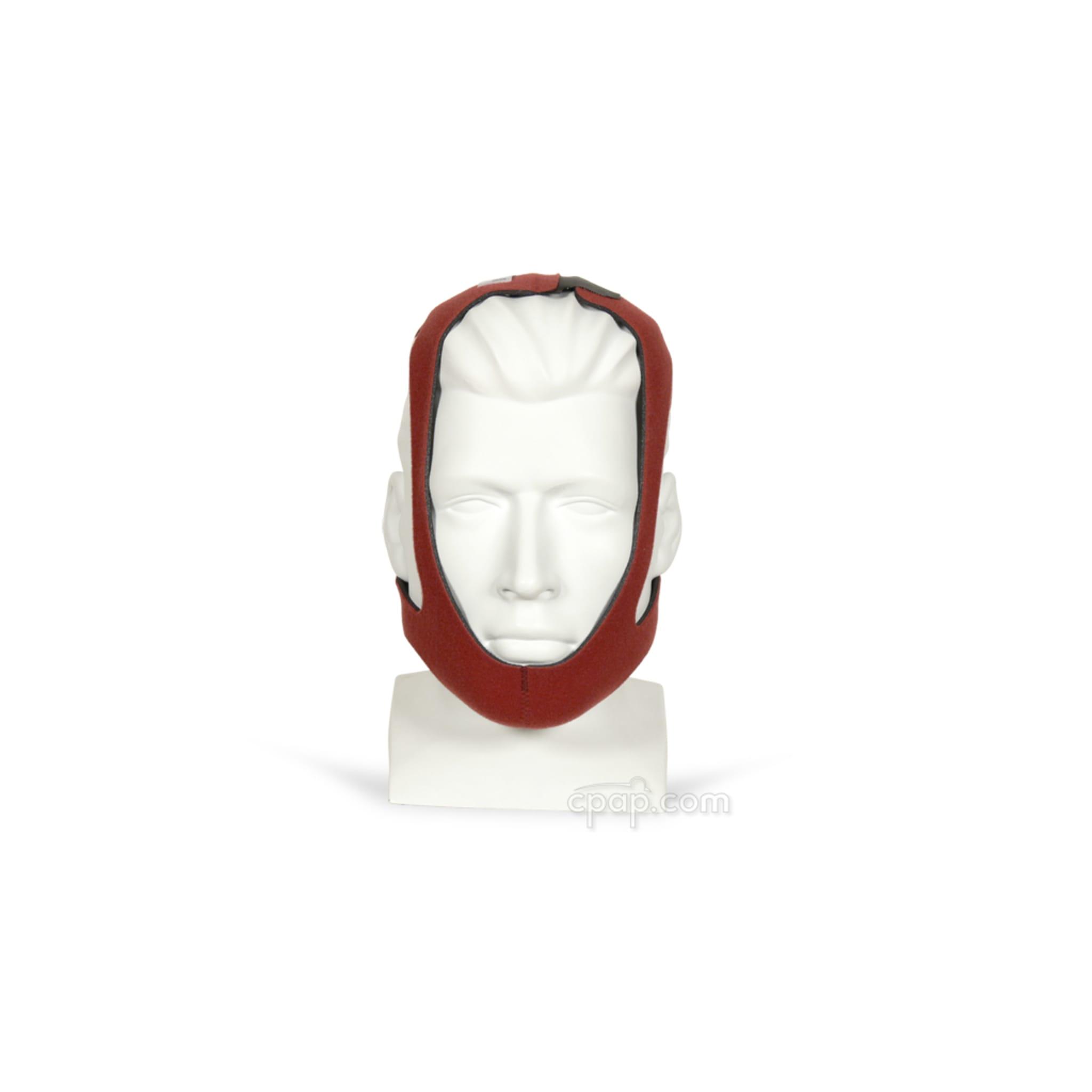
chinstrap is the first response to opening the mouth during sleep. It is worn in addition to the CPAP mask to hold the jaw up and help keep the mouth closed.
Even with the use of a chinstrap, some people are still able to breathe through their teeth and lips. If so, a full face mask is an option worth considering.
A basic chinstrap cups the chin and has narrow straps that connect at the top of the head, usually with Velcro. It works best for those who sleep on their side and who do not open their mouth very much. The straps may fall forward or backward on the head if not held in place by the mask headgear. An example of this type of chinstrap is the Sullivan Chinstrap.
For greater strength, a wider chinstrap is available. The width of the strap is sufficient to cup the chin, and narrow straps are available to attach across the forehead to keep the chinstrap from falling back, as well as across the back of the head to keep it from falling forward. This style of chinstrap is more stable, but it will cover the ears. An example of this type of chinstrap is the Premium Chinstrap.
Another style of chinstrap is a series of straps that cup the chin at a lower angle for greater support, and include the stabilizing straps in the design. An example of this type of chinstrap is the CPAP.com Deluxe Chinstrap.

Air leaks from the mouth whenever the mouth is opened during CPAP therapy. This occurs for many reasons, but a very common one is due to nasal irritation from the CPAP airflow.
The correlation to a lack of humidification and mouth leaks is a topic being heavily researched. Studies are now being conducted on the hypothesis that a large amount of mouth leakage is caused by the following cycle:
Dry mouth is a sign that you are opening your mouth while you sleep. If you use nasal mask, breathing through your mouth bypasses any humidification you may be using so increasing the heat will not be effective. Breathing through your mouth while using a nasal mask reduces the benefit of the CPAP therapy.
First be sure the mask is not leaking. If it is six to nine months old and leaking, try replacing it. If it is new and leaking, we can help you get a better size.
If your mask is new and NOT leaking, try a chinstrap to keep your jaw up and mouth closed. If a chinstrap doesn't solve the problem, try a full face mask that covers your nose and mouth.
If you use a full face mask and have a dry mouth, try adding a heated humidifier to add moisture.
People who have a deviated septum or small nostrils, or suffer from season allergies or chronic sinus issues, may breathe through the mouth rather than the nose. If you are a person who breathes through your mouth you may be able to wear most masks with a few adaptations. Add a chinstrap is using nasal pillows, nasal prongs or a nasal mask.
A full face mask or hybrid mask can be used without a chinstrap because the seal covers both the nose and mouth. A full face mask will allow you to breathe through your mouth or through your nose.
If you suffer from chronic sinus issues, a full face mask or an oral face mask are good options. Oral masks work best for mouth breathers with blocked nasal passages. You must use a heated humidifier with the oral mask. CPAP.com sells the Oracle HC452 Oral CPAP mask.
If you are a mouth breather who does not want to or cannot wear a chinstrap, please see our recommended masks for Mouth Breathers.