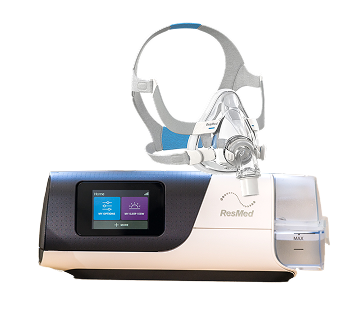
This is an optional add on for CPAP.com customers renting CPAP, APAP, BiLevel or BiLevel ST loaner machines.
The stand alone heated humidifier is not guaranteed to be any specific model or brand. It will be sanitized by our in house technicians.
The loaner program is subject to the CPAP.com Loaner Policy. Return On Warranty Issues Only
Specifications
CPAP.com always offers these services:
8 am to 10 pm CST Toll Free Phone and Email Support
24 hour access to our CPAPtalk.com Support Forum
Learning Center for information on sleep apnea and cpap equipment
Consumer Purchasing Trends Reports
Product Evaluation Results from our Product Challenges
Warranty Services for all items purchased through CPAP.com
Insurance Compliant Invoices
Free Prescription Request System
Important Tips
You may use the loaner humidifier provided until your original humidifier is returned to you. Included in the shipment is a return shipping label. It is used to return your broken humidifier to us for repairs. A second return label will be issued with the return of your repaired humidifier so you may return the loaner to us.
"I recommend Cpap.com. Very reliable and helpfull. They work with you to get you the right equipment with professional turn around time. Great team!!!"
Are prescriptions required for mask, machine and/or humidifier purchases?
Yes. Federal law requires we have a valid prescription on file before we ship your mask, machine and/or humidifier.
We provide many easy ways to get your prescription:
We can request your prescription for you! When you checkout, just let us know you would like us to request your prescription, or you can log into your account to have us request your prescription.
Fax your prescription to our Toll Free fax number: 1-866-353-2727, or our international fax number: 713-541-7370
For more information on prescriptions, please see our Prescription Section of the Learning Center.
What is a heated humidifier?
A heated humidifier uses heat to produce moisture. The heat is adjustable for more or less moisture, and the chamber is much smaller than a passover humidifier.
It is our experience from over ten years of specializing in CPAP equipment, that patients who use heated humidifiers have a much higher rate of therapy effectiveness to CPAP therapy.
There are three types of heated humidifiers:
Stand Alone Humidifiers
Integrated Humidifiers
Built In Humidifiers
What is a passover humidifier?
A passover humidifier is a chamber of water added to the CPAP to help moisten the airflow and reduce irritation to the nasal passages.
Air flows from the CPAP, through a short hose to the humidifier, then into the six foot hose to the mask. The air picks up whatever moisture it can as it "passes over" the water in the chamber.
Passover humidifiers may provide sufficient moisture with CPAPs set at lower-end pressures, but if not, there is no way to increase the amount of moisture produced. Furthermore, in cold climates, the water temperature in the chamber will drop, causing the CPAP air to become very cold and reduce the amount of moisture.
What is an integrated humidifier?
An integrated humidifier is a component to a specific CPAP that fits directly to the CPAP, eliminating the need for a second hose and in some heated humidifiers, a second power cord.
The advantage of an integrated humidifier is a more compact unit that uses fewer parts.
A disadvantage is that they may produce less moisture if used as passover humidifiers because the surface area is typically smaller. Also, most integrated humidifiers will function only with the CPAP for which they were designed.
You can see if your machine has an integrated humidifier option by reviewing our compare charts.
An example of an integrated humidifier is the PR System One Heated Humidifier as seen below attached to one of the PR System One line of CPAP machines.
What is a built in humidifier?
A "built in" humidifier is designed so that it is part of the CPAP machine and cannot be removed or separated from the CPAP machine. This is similar to an all-in-one unit eliminating the need for a second hose or second power cord. Usually the water chamber can be removed for cleaning or replacement purposes.
The advantage of a "built-in" humidifier is a more compact unit that uses fewer parts. This design also helps to ensure therapy effectiveness by including the heated humidifier which may provide comfort to the CPAP user they may not have received otherwise.
A disadvantage is that they may produce less moisture if used as passover humidifiers because the surface area is typically smaller. Also, since the humidifier is "built in" to the machine, the ability to detach the humidifier is not an option. This can be an issue for frequent travelers. Lastly, if the machine or humidifier stops working, the entire unit must be sent in for repair or replaced, not just the component that failed.
A stand-alone humidifier is a component that will work with any CPAP and does not attach directly to the CPAP. It uses its own power cord and typically a short hose is used to connect it to the CPAP. Usually it would sit next to the CPAP machine and is slightly larger than an integrated humidifier.
The advantage of a stand-alone humidifier is superior humidity and control and often a larger water capacity with the chamber. Also, the fact they may be used with any CPAP machine can be useful.
The main disadvantage is that the size is often larger than either a "built in" or integrated humidifier with the short hose are needed to connect it to the CPAP machine.
Rainout is the accumulation of water in a CPAP tube due to warm moist air cooling on its way from your CPAP machine to your CPAP mask.
The image below from Fisher & Paykel explains how rainout is formed. Warm moist air leaves the heated humidifier and travels down the CPAP tube. As the air travels down the tube the room temperature can cool the tube and therefore cool the air traveling down the tube. As the air cools, the air released its moisture and condensation occurs, otherwise known as rainout.
Solutions to rainout include:
Raising the temperature of your bedroom.
Keep your CPAP machine at the same level as your bed.
Insulating your tubing with a hose cover like Snugglehose.
Purchasing a CPAP machine with a rainout reduction comfort feature.
How do I care for my humidifier?
The only care the humidifiers require is that you empty and clean the water tank after use in the morning. Be sure to use distilled water only in the tank.
Why do I need to use distilled water with in my humidifier tank?
Using distilled water helps keep your humidifier clean and mineral deposit free. If you were to use tap water, the water would evaporate to leave a hard white mineral deposit in your tank or lead to mold growth. Cases of lung disease have been connected to using contaminated well water in a CPAP humidifier.* Source
If you can't get distilled water where you live, use bottled water. You will need to rinse your tank out each morning and do not leave standing water in your tank between uses.
What does a humidifier prescription need to say?
Contains one of the following words or phrases "CPAP Humidifier", "Humidifier", "HH", "CPAP Supplies", "CPAP Mask", "CPAP", "Continuous Positive Airway Pressure", "APAP", "AutoPAP", "AutoSet", "Auto CPAP", "Auto Adjusting CPAP", "Self Adjusting CPAP", "BiPAP", "BiLevel", "VPAP", "BiPAP Auto", "BiPAP ST", "Synchrony ST", "VPAP ST"