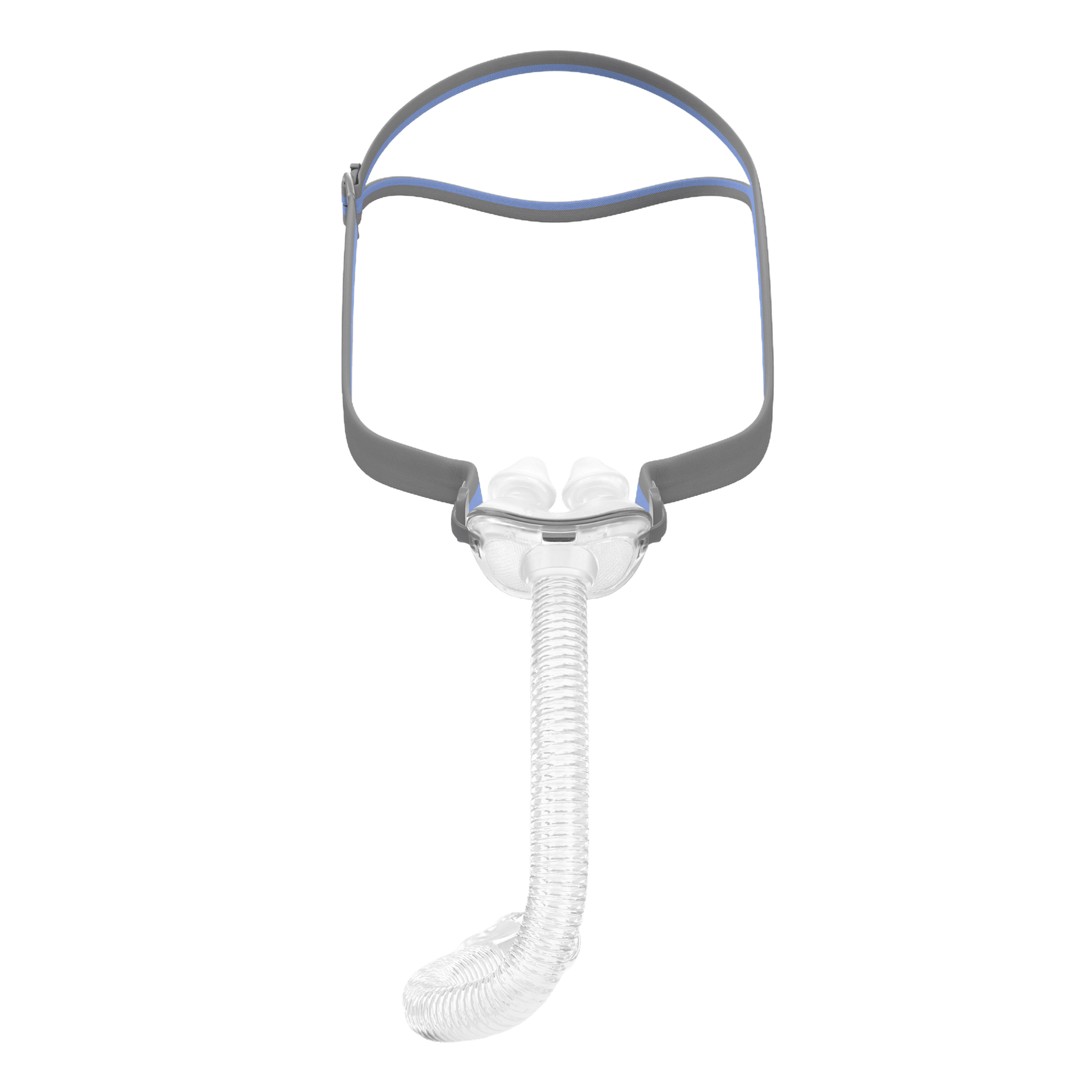
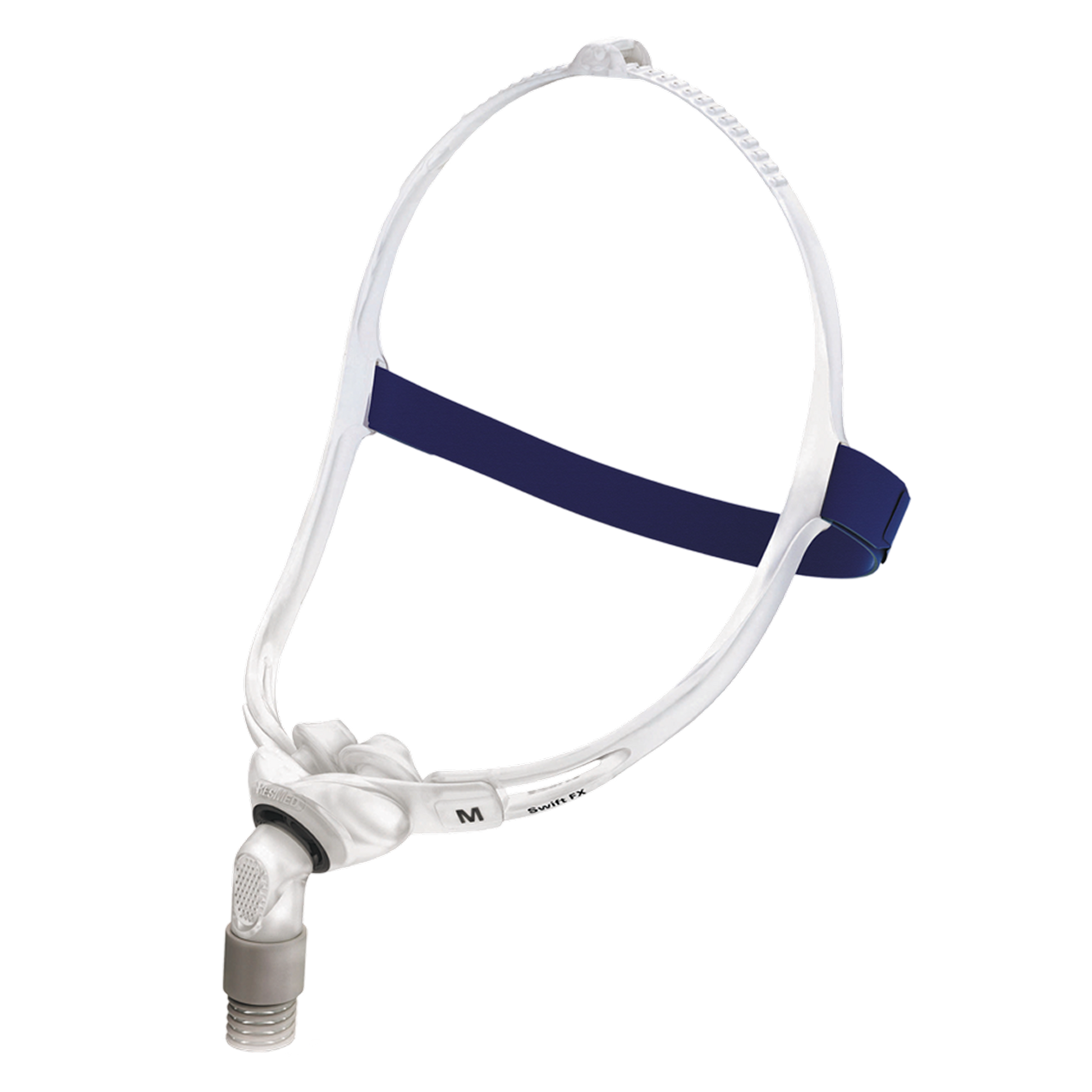
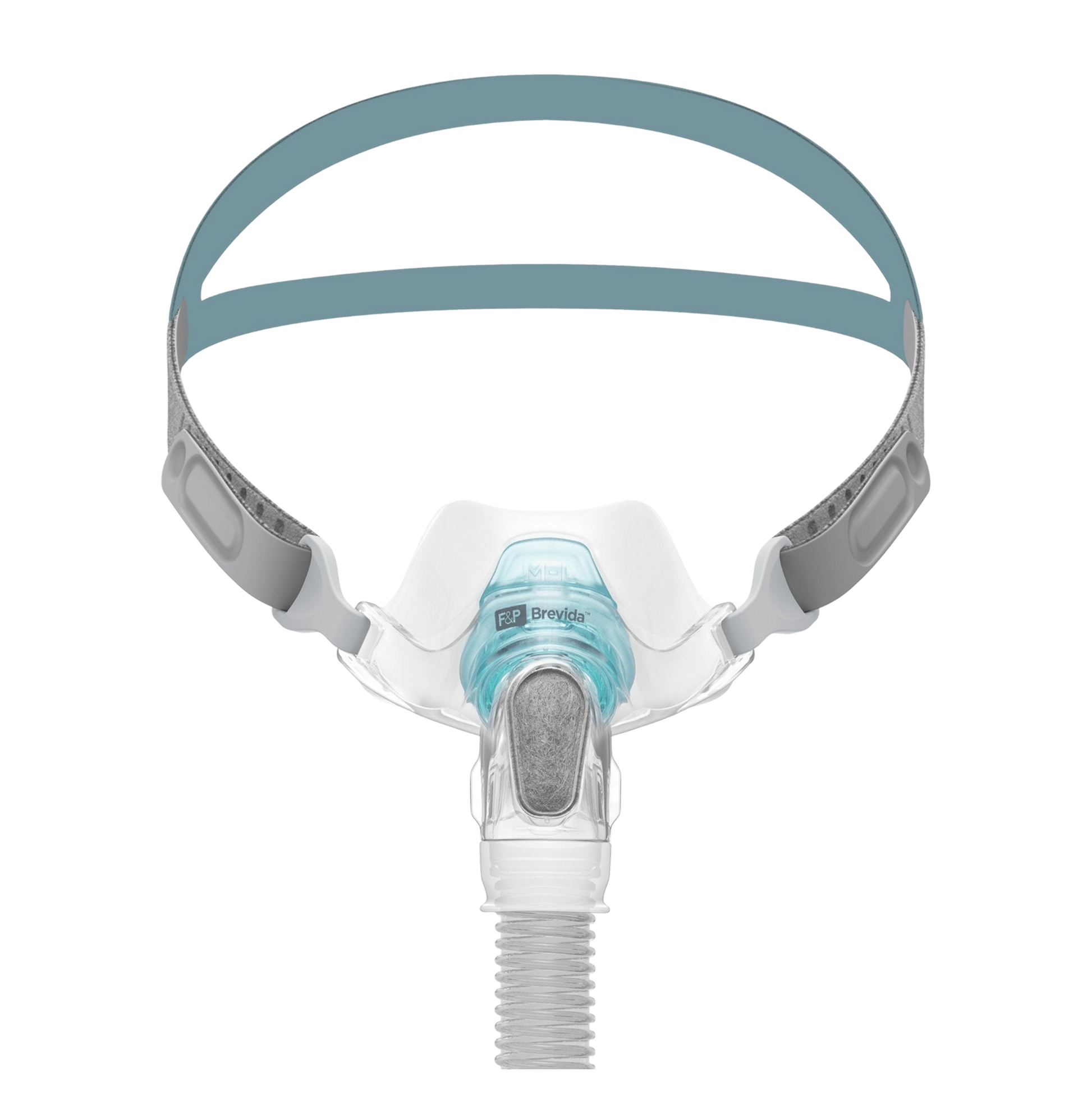
Tiara has re-introduced an innovative nasal system called the SNAPP 2.0 (Soft Nasal Accessory for Positive Pressure). The SNAPP 2.0 Direct Nasal Interface is an improvement to Tiara's SNAPP-X Mask. The new prong sleeve is designed with a better multi-ported exhalation point and provides a smoother bellow prong that expands and compresses with patient movement. The unique butterfly headgear helps keep constant pressure against the prongs and nose which prevents tension on the swivel elbows. Also included is a set of locking clips that help create a solid seal around the elbows and keeps the airflow quiet, even at high pressures.
There are three points for the mask to form a seal. A soft nasal "volcano" shape creates a double seal at the patient's nostrils. The prong is narrow at the top and bells out as it comes down to the cushion body, allowing the prong tips to insert into the nose to a depth of 1/8" to 1/4". This creates a soft seal in the interior of the nares. The pillow body at the end of the prong creates a simultaneous seal at the outer rim of the nares. Lastly, the cushion body seals once the head straps are adjusted for patient comfort.
This feature addresses the soreness patients often experience when a cushion obstructs only the inside of the nose. The bellows cushion has an added feature of swivel elbows on each side, that allow movement of 360 degrees. Patients have the freedom of wearing their CPAP hose up over their head or over the chest. The single exhalation port is found below the bellows cushion, thereby directing air flow downward, rather than onto a bed partner.
The headgear is a very simplistic design of just two straps, one fitted over the crown of the head and the other over the back of the head. The headgear attaches to the bellows on two soft butterfly flanges. If needed, a user would be able to place the mask on themselves using only one hand, once the straps are adjusted for comfort.
NEW Multi-ported exhalation port
NEW Locking clips for elbows
NEW Cushioning bellows
Unique Butterfly headgear attachments
Special 360 Degree Swivel Elbows
Several wearable configurations
The Small Size cushion is not compatible with size Medium, Large, and XL masks. There are two different size elbows and tubing. The Small Size cushion will not work with Multi-Size tubing.
Do you move around a lot when you sleep? These masks are ideal for users who either sleep on their side or stomach or restless sleepers who toss and turn. There are a few specialized cushions that address this issue as well as most Nasal Pillow and Prong CPAP masks.
These masks are designed to prevent mouth leaks. If you are opening your mouth during the night, airflow escapes and reduces therapy effectiveness. Users who are experiencing a dry mouth, sore throat, or sinus congestion may require a mask that seals around the mouth.
TV Friendly CPAP masks have interfaces that avoid obstructing your vision so you can read or watch TV before going to bed. Any mask designed without a forehead piece will fall under this property.
These masks have the least amount of material around the face, fewer headgear points, and offers more freedom when you sleep. Most Nasal Pillow and Nasal Prong masks are ideal for claustrophobic users.
These masks offer replaceable cushions, pillows, or prongs. These unique CPAP Masks offer replaceable cushions as a low cost solution to keep your mask feeling and working like new.
Tired of adjusting your headgear every time you take your mask off during the night? Quick-Clips allow users to easily remove and replace the mask on your face without re-adjusting the headgear straps.
Indicates which masks come packaged with more than one cushion, pillow or prong. Masks can come packaged with ALL Sizes or a combination of sizes as a Fit Pack. This is ideal for users who have not tried the mask before and do not know the right size to select.
This property identifies masks that are ideal for small facial features. Any mask with a size petite or extra small will be marked 'Yes'. Nasal Pillow masks are ideal because they accommodate the size of the 'nare' or nasal openings, not the face.
The value will be marked 'Yes' for CPAP masks with interfaces that are unique to CPAP users with wide facial features. Masks with 'Wide' cushion sizes would fall under this category. Nasal pillow and prong masks are ideal for wide faces because the seal occurs around the nare, not the face.
These CPAP masks have interfaces that accommodate a wide variety of facial hair styles. Gel cushions and foam inserts provide support and comfort for users who may need to over-tighten headgear straps to help seal around facial hair. Silicone gel also helps create a fluid seal over the hair.
Yes
Yes
Yes
CPAP.com always offers these services:
8 am to 10 pm CST Toll Free Phone and Email Support
24 hour access to our CPAPtalk.com Support Forum
Learning Center for information on sleep apnea and cpap equipment
Consumer Purchasing Trends Reports
Product Evaluation Results from our Product Challenges
Warranty Services for all items purchased through CPAP.com
Insurance Compliant Invoices
Free Prescription Request System
Important Tips
Cushions are sized Small, Medium, Large and Extra Large. Most patients will take a Medium size.
"I was really excited about a nasal prong vs pillow. This mask disappointed me on day one and in less than a week I went back to my Swift FX. The tubing on this mask is heavy. The prongs are not as I pictured after talking to a CPAP.COM representative. The "prongs are maybe 2mm longer that my Swift FX and they do not "puff up" as was inferred by my discussion; so essentially they are pillows. The two tubes that feed the air are so heavy they continously challenged my keeping the "mask" on. My hopes were dashed. I now know that I am lucky to have ever found the Swift FX. As the reviews sate, many people love the SNAPP 2.0 but it is not my cup of tea."
John Jr H, SD – September 07, 2011
"Comfortable and ez to use."
John G, OH – March 19, 2011
"My favorite nasal prong after using CPAP for twenty years and masks most of that time. Eliminates the mask facial markings or redness and delivers a peaceful night's sleep"
Donald N, FL – October 13, 2010
"I have has several. Once in while you can get one that leaks a litte at the swivels on the sides. Some are more comfortable than other. Overall, I like them"
nasal prong is useless
Craig W, CA – August 27, 2010
"I ordered this to replace my Nasal Aire I CPAP mask. I liked the fact that the headgear is simple and doesnt appear to get tangled. The mask appears to be very well made but the nasal prong portion of the mask doesn't fit well at all. The plastic is so thin that it bends and wont stay in my nose. I have to tie the headgear so tight that its more like a nasal pillow system then a prong and even then if I move I get leaks. I went back to my nasal Aire mask 2 days later"
We work very hard to provide many different ways for our customers to compare products. Here are the machine product guides we have created and maintain:
CPAP Machine Comparison Guide. This guide stacks up every CPAP machine we sell, feature by feature. If you don't know the meaning of a feature, click the question mark for a definition. The links below will take you to the most popular CPAPs, or all CPAP machines we sell.
Auto Adjusting Machine (APAP) Comparison Guide. This guide stacks up every APAP machine we sell, feature by feature. If you don't know the meaning of a feature, click the question mark for a definition. The links below will take you to the most popular APAPs, or all APAP machines we sell.
BiPAP, VPAP and BiLevel Comparison Guide. This guide stacks up every BiPAP machine we sell, feature by feature. If you don't know the meaning of a feature, click the question mark for a definition. The links below will take you to the most popular BiPAPs, or all BiPAP machines we sell.
Do you have a guide to help me choose the right mask?
Yes, we created a Help Me Choose guide to help you select the right mask or machine according to your preferences. The guide asks you a series of questions regarding your preferences and your facial features. Based on your answers we provide you with a comparison chart of the masks that meet your criteria. Get started here:
Are prescriptions required for mask, machine and/or humidifier purchases?
Yes. Federal law requires we have a valid prescription on file before we ship your mask, machine and/or humidifier.
We provide many easy ways to get your prescription:
We can request your prescription for you! When you checkout, just let us know you would like us to request your prescription, or you can log into your account to have us request your prescription.
Fax your prescription to our Toll Free fax number: 1-866-353-2727, or our international fax number: 713-541-7370
For more information on prescriptions, please see our Prescription Section of the Learning Center.
What are the CPAP, BiPAP and Sleep Apnea related billing codes?
EO601 RR is CPAP rental
E0601 NU is CPAP purchase
A7034 is CPAP mask
A7032 is CPAP Nasal mask cushion
A7033 is CPAP Nasal pillows
A7030 is CPAP Full Face mask
A7031 is CPAP Full Face mask cushion
A7044 is CPAP Oral Interface
A7027 is CPAP Hybrid mask
A7028 is CPAP Hybrid mask cushion
A7029 is CPAP Hybrid mask nasal pillow
A7046 is CPAP Humidifier Chamber
A7037 is CPAP tubing, long and short hoses
A4604 is CPAP Heated tubing
A7038 is CPAP disposable filter
A7039 is CPAP gross particle (foam) filter
A7035 is CPAP headgear
A7036 is CPAP chinstrap
E0561 NU is CPAP Passover Humidifier
E0562 NU is CPAP Heated Humidifier
E0470 RR is BiPAP rental
E0470 NU is BiPAP purchase
E0471 RR is BiPAP-ST rental
E0471 NU is BiPAP-ST purchase
Other CPAP items are listed under E1399, which is miscellaneous.
How often should I replace my mask?
Medicare allows for mask cushion replacement every three (3) months and complete mask system replacement every six (6) months. CPAP manufacturers and vendors suggest these replacement schedules as well.
In our experience, most mask cushions begin to deteriorate after about six months of use. The silicone eventually becomes too soft to hold a seal and headgear straps must be tightened more and more to get the same quality seal.
We strongly suggest replacing cushions and pillows as soon as they start to soften. Air leaks may reduce the effectiveness of CPAP therapy and headgear that is too tight may cause facial sores at pressure points. You can also replace the headgear of your mask if it is stretched out or the Velcro worn out.
To see what parts of your mask are replaceable refer to our Replacement Part Finder. Search for your mask and then see all of the replaceable parts.
How do I care for my mask?
Masks should be washed daily in warm water with baby shampoo and left to air dry. Never use antibacterial soap as it will break down the silicone of the mask. Avoid soaps with lotion or lanolin which can coat the mask and cause it to lose its seal. A safe cleaner is the Control III Disinfectant CPAP Cleaning Solution. Remember to go to bed with a clean face, this will improve your seal and protect the lifespan of your mask.
The best time to clean your mask is in the morning so that the oils from your skin are removed. We recommend using mask wipes to make daily morning cleanings easy. The mask wipes are made from materials that will not break down your mask.
What does a mask prescription need to say?
Contains one of the following words or phrases: "CPAP Mask", "CPAP Supplies", "CPAP Humidifier", "CPAP", "Continuous Positive Airway Pressure", "APAP", "AutoPAP", "AutoSet", "Auto CPAP", "Auto Adjusting CPAP", "Self Adjusting CPAP", "BiPAP", "BiLevel", "VPAP", "BiPAP Auto", "BiPAP ST", "Synchrony ST", "VPAP ST"
Contains physician's contact information
Contains physician's signature
Contains the patient's full name
Why might I prefer a nasal prong device?
Nasal prong masks are similar to nasal pillow masks, however the prong will rest deeper inside the nostril and inflate slightly against the walls of the nostril to seal with pressure. This is different from a nasal pillow mask which creates a seal by resting against the nostril opening.
It is highly recommended to use heated humidification to prevent dryness that may occur when using a nasal prong or nasal pillow device.