Find a Specific Product Ask a Question

CPAP Equipment: CPAP Supplies

CPAP Supplies

CPAP Supplies

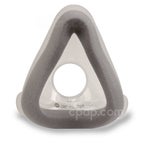
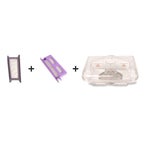
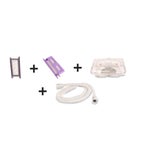
Filters, tubing and mask cushions are the items that most often need to be replaced. Filters help to clean the air generated by the CPAP machine. In general filters should be replaced every four weeks. People living in homes with smoke or pets will need to replace CPAP filters more frequently. Tubing should be replaced every 12 months, while the life expectancy of mask cushions varies based on the brand and model. Visit the CPAPtalk.com forum or the specific product page of the CPAP mask to know when to replace your mask cushion.

CPAP Supplies FAQs

Do all CPAPs use filters?

Yes, all CPAPs use at least one filter that is usually a type of foam material and washable. Some CPAPs offer finer filtration with the addition of a disposable paper filter.

Cleaning and changing filters is the only maintenance required for a CPAP machine.

The filters are located at the back of the machine at the air intake. The image below shows the black foam filter at the back of the Everest 3 CPAP Machine.

Everest 3 Filter

What are the different types of filters?

There are four types of filters used with CPAP Machines: Resuable Foam filters, Disposable White Fine filters, Disposable Dual Filters and Bacteria filters.

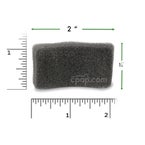
Reusable Foam Filters. Reusable Foam filters are placed at the air intake for your machine and are designed to catch larger particles. These filters can be lightly washed with a mild detergent to remove any particles that have collected, and are suggested to be replaced every 6 months, or more if the filter starts to break down. If two filters are used in a machine, the foam filter should be on the outside. M Series Filters

Disposable Filters. These filters cannot be washed. There are three types of disposable filters:

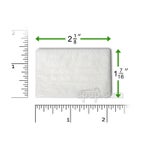
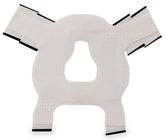
  • White Disposable Fine Filters. Ultra fine filters collect much smaller particles and are useful for those with allergies or sinus issues. These filters are not meant to be cleaned, but discarded when dirty. This filter is placed at the air intake for your machine and are used with a Reusable Foam filter. It is placed inside the filter first with the foam filter on the outside. This filter should not be washed and is suggested to be replaced every month, or more often with a more dusty environment. M Series Fine Filter
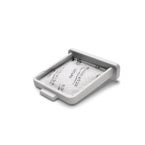
  • Standard Disposable Filters. Disposable standard filters clean large particulate matter from the air as it enters the CPAP or BiLevel machine. This filter is placed at the air intake for your machine and is used by itself, mostly for ResMed machines. For the S8 machines, one side is colored, usually yellow or blue, and the other is white. It is placed with the color side facing out. For the S9 machines, they are only white and it does not matter which side faces into the machine. These filters should not be washed and is suggested to be replaced every 6 months, or more often with a more dusty environment. These come in different shapes depending on the machine. Below are examples of the standard disposable filters for the S8 and S9 machines.
S8 Standard Filter S9 Hypoallergenic Filter
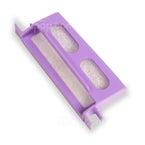
  • Hypoallergenic Disposable Filters. Hypoallergenic filters are made of a combination of two different density filter materials in order to block both the fine and large particulate matter. This filter is placed at the air intake for your machine and is used by itself. Hypoallergenic Disposable filters are available for the S8 and S9 ResMed machines if you want more filtration than the standard filter. This filter should not be washed and is suggested to be replaced every 6 months, or more often with a more dusty environment. These come in different shapes depending on the machine. Below are the hypoallergenic filters for the S8 and the S9 machines. S8 Hypoallergenic Filter S9 Hypoallergenic Filter
    Bacteria Filters. Bacteria filters are fine enough to remove some bacteria and are clinically indicated when a CPAP machine is used by more than one person. However, many CPAP users find them helpful in reducing the occurrence of sinus infections and other nasal issues. Bacteria filters can be used with an CPAP/APAP/ or BiPAP machine.

    They may be used with humidifiers, but should be removed and allowed to air dry during the day. This filter is placed at the air outtake for your machine if you are not using a humidifiers. If you are using a humidifier, it is placed at the air outake for your humidifier. The bacteria filter is placed in the air outtake and the CPAP hose is placed on the other end.

    The entire housing is disposable and should be discarded as soon as matter becomes visible. A clogged Bacteria filter may affect the amount of air delivered by the CPAP.
    Bacteria Filter Bacteria Filter Air Flow

    In what order do I insert the filters?

    If both the foam and paper filters are used, the paper filter is inserted first with the smooth side against the machine and the soft, fuzzy side facing out. The tab is folded out for easy removal. The foam filter is placed on the outside to remove the larger dirt particles first.

    If you are using a two colored filter, the colored side faces out as shown in the image below.

    S8 Filter

    How often should I clean my filters?

    Washable foam filters should be cleaned as soon as they become discolored. Depending on your environment, that may mean weekly cleaning.

    Disposable filters should not be cleaned, just disposed of.

    How often should I replace my filters?

    Reusable foam filters should be replaced when they deteriorate and begin to fall apart, much as a sponge does. The foam filter should be washed with a mild detergent monthly and should be replaced every 6 months or more if the foam is torn.

    Disposable fine filters should be discarded as soon as they become discolored or at least every 30 days.

    Disposable dual filters should be discarded every 6 months or more often if the machine is in a dusty environment.

    If you like in a house with pets or smoke, you may need to replace the filters more often.

    How can I find replacement parts for my CPAP Machine?

    Wondering which filters work for your machine? Or trying to find the right replacement power cord? To find what parts are compatible with your machine or to find what parts of your machine are replaceable you can:

    • Use our Replacement Part Wizard to identify your machine and see all the related parts.
    • Browse for your machine and then click the "Replacement Parts" button on your machine's product page.

    What comes with my machine?

    Machines come with a six foot hose, power cord, at least one filter, and manuals. Most manufacturers include a carrying case which is designed specifically for their equipment. CPAP / BiPAP / APAP machines do not come with a delivery system or mask. CPAP Masks must be purchased separately.

    To see the list of what specifically comes with each machine, you can browse for a machine. Then on the product page, click the "Specs" tab to see a full list of what comes with the machine.

    PR System One Auto CPAP Machine

    What maintenance is required on machines?

    The only care required for machines is to clean or change the filters at the air intake of the machine to keep the internal parts from accumulating dust.

    There are other suggested actions to care for your machine:

    • Keep the area around your machine clean. Remove any dust from around your machine to improve the air quality delivered to your machine.
    • Keep the air intake of the machine unblocked. Curtains, bedding, and papers can easily block the air intake of your machine, reducing the airflow to your machine.
    • If you have a humidifier, it is suggested that you do not pick up the machine with the humidifier attached. With most machines, it is easy to spill water from the humidifier into the machine and cause damage. To avoid this, it is suggested to remove the machine from the humidifier instead of transporting them together.
    • If you have a humidifier, it is also suggested that you empty the water from the chamber every morning. Accidents happen. If a family pet, or family member moves the machine and humidifier, when there is water in the chamber, it is more likely an accident could happen where water is spilled into your machine.

    How can I find replacement parts for my CPAP Mask?

    For many masks there are many parts that are replaceable like the mask cushion, headgear, headgear clicks, mask frame, and other parts. To find what parts are compatible with your mask or to find what parts of your mask are replaceable you can:

    • Use our Replace Part Wizard to identify your mask and see all the related parts.
    • Browse for your mask and then click the "Replacement Parts" button on your mask's product page.

    How do I care for my mask?

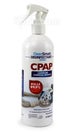
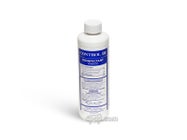
    Masks should be washed daily in warm water with baby shampoo and left to air dry. Never use antibacterial soap as it will break down the silicone of the mask. Avoid soaps with lotion or lanolin which can coat the mask and cause it to lose its seal. A safe cleaner is the Control III Disinfectant CPAP Cleaning Solution. Remember to go to bed with a clean face, this will improve your seal and protect the lifespan of your mask. Citrus Mask Wipes
    The best time to clean your mask is in the morning so that the oils from your skin are removed. We recommend using mask wipes to make daily morning cleanings easy. The mask wipes are made from materials that will not break down your mask.
    Citrus Mask Wipes

    How often should I replace my mask?

    Medicare allows for mask cushion replacement every three (3) months and complete mask system replacement every six (6) months. CPAP manufacturers and vendors suggest these replacement schedules as well.

    In our experience, most mask cushions begin to deteriorate after about six months of use. The silicone eventually becomes too soft to hold a seal and headgear straps must be tightened more and more to get the same quality seal.

    We strongly suggest replacing cushions and pillows as soon as they start to soften. Air leaks may reduce the effectiveness of CPAP therapy and headgear that is too tight may cause facial sores at pressure points. You can also replace the headgear of your mask if it is stretched out or the Velcro worn out.

    To see what parts of your mask are replaceable refer to our Replacement Part Finder. Search for your mask and then see all of the replaceable parts.

    Does this product contain BPA?

    Yes, all CPAP masks either contain BPA or their manufacturer has not released a statement calling their products BPA free. Here is a statement released by Respironics:

    Government of Canada Takes Action on Another Chemical of Concern: Bisphenol A

    April 25th 2008

    To Whom It May Concern

    This document represents Respironics' position regarding the use of Bisphenol A in Respironics Sleep and Home Respiratory Devices. On April 18, 2008, the Government of Canada, banned the use of Bisphenol A (BPA) in polycarbonate baby bottles, claiming that the exposure to BPA on newborns and infants up to 18 months of age, could potentially present a health risk to this patient group when the polycarbonate baby bottles are exposed to high temperatures.

    At this time, we are able to provide the following information to our customer: NONE of our Sleep and Home Respiratory products which are either breathable or skin contacting are intended for use with newborns or infants under 18 months of age. Therefore, Respironics is in compliance with Health Canada's position for exposure for the identified at risk patient population.

    Although Health Canada's restriction for BPA does not include products used for ages above 18 months at this time, Respironics is evaluating its product portfolio and will take the appropriate actions to determine and mitigate any potential risk from use of its products or potential exposure to BPA. It should be noted that NOT all polycarbonate resins contain BPA. In response to the direction provided by Health Canada's device licensing division, Respironics will be evaluating all of our Class II and III medical devices to determine if the resins used in the manufacturer of its products contain BPA.

    Further, none of our products or accessories using polycarbonate are labeled for exposure.

    In closing it is Respironics position that our products do not pots any increased risk of exposure to BPA for our users and thus our products remain safe for use.

    If you have any further question regarding this topic, please feel free to contact me at zita.yurko@respironics.com or at 724-387-4120.

    Regards,

    Zita Yurko Director, Regulatory Affairs Sleep and Home Respiratory Division Respironics, Inc.

    What is CPAP tubing/CPAP hose?

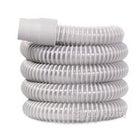
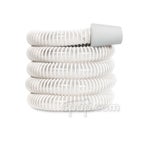
    CPAP tubing and CPAP hose can be interchangeable terms. CPAP hoses/tubing are used for two main purposes: either to connect the machine or humidifier to the CPAP mask, or to connect the machine to a humidifier.

    Machine to Mask Hose. Machine to Mask hoses are the standard hose used with most therapy setups. The hose is placed to the air outtake of either the machine or humidifier and connects to the CPAP mask to deliver the airflow to the mask. There are three types of machine to mask hoses:

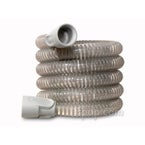
    • Standard/Performance Hose. Standard 6 foot hoses come included with each cpap machine purchase. The posts on all CPAPs, humidifiers and masks are a standard size, so a standard CPAP hoe will fit on all. The standard hoses are also available in 8 foot and 10 foot sizes. There are also lighter hoses available that were designed to be more flexible and put less pull on the CPAP mask.CPAP Performance Tubing
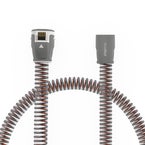
    • Hose with Sensor Line. A few auto-titrating CPAPs and Bilevels require a pressure line sensor to detect breathing patters and pressure needs. The machines that require this tubing have been discontinued and are no longer sold.Sensor Line Tubing
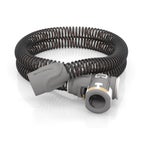
    • Heated Hose. A heated CPAP hose contains copper coils embedded in or wrapped around it. These coils conduct a constant temperature through the hose. Heated hoses can only be used with specific machines.Heated Hose

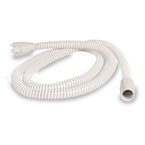
    Humidifier Hose. Humidifier hoses connect a CPAP machine to a stand alone humidifier to deliver airflow from the machine to the mask. Humidifier hoses are smaller than standard hoses. They come in either 18 or 24 inches.
    18 in Humidifier Hose

  • Are all CPAP hoses the same?

    All CPAPs use basically the same hose, but there may be additions that are necessary to operate certain machines.

    A standard CPAP hose is six feet long. The ports on all CPAPs, humidifiers and masks are a standard size and so a standard CPAP hose will fit on all. The best hoses are smooth-bored for less noise.

    Many auto-titrating CPAPs and bilevels require a pressure line senor to detect breathing patterns and pressure needs. The sensor may be in the form of an adapter with narrow tubing attached, or narrow tubing threaded inside the six foot hose. In both cases, one end of the narrow tubing is plugged into the machine. Those machines will not operate without the pressure line sensor.

    There are certain delivery devices, such as the Comfort Curve, which require a special CPAP hose, too.

    Why is there water in the six foot CPAP hose?

    Water collects in the six foot hose when the ambient room air is much colder than the heated CPAP air, or when there is too much moisture being produced by the humidifier.

    First be sure that no vents or fans blow directly onto the CPAP hose.

    Next, try turning down the temperature on the heated humidifier. If that alleviates the problem but causes irritation to the nasal passages, return the humidifier to the previous setting and add an insulating cover to the hose.

    If neither response works, try using a heated CPAP hose.

    How can I get help from a CPAP Expert?

    • Ask A Question. Question Submission Form.
    • Email Us. cpap@cpap.com.
    • By Phone. 1-800-356-5221 (7 AM -10 PM CST Mon-Fri; 8 AM - 6 PM CST Sat)
    • By Fax. 1-866-353-2727

    What is rainout?

    Rainout is the accumulation of water in a CPAP tube due to warm moist air cooling on its way from your CPAP machine to your CPAP mask.

    The image below from Fisher & Paykel explains how rainout is formed. Warm moist air leaves the heated humidifier and travels down the CPAP tube. As the air travels down the tube the room temperature can cool the tube and therefore cool the air traveling down the tube. As the air cools, the air released its moisture and condensation occurs, otherwise known as rainout.

    Solutions to rainout include:

    • Raising the temperature of your bedroom.
    • Keep your CPAP machine at the same level as your bed.
    • Insulating your tubing with a hose cover like Snugglehose.
    • Purchasing a CPAP machine with a rainout reduction comfort feature.


    Conventional Humidification

    What is a heated CPAP hose?

    A heated CPAP hose contains copper coils embedded in or wrapped around it. These coils conduct a constant temperature through the hose.

    Heated hoses are more expensive alternatives to cloth tubing insulation, but they prevent rainout in nearly all cases. An example of a heated hose, the ThermoSmart Heated Hose is shown below.

    ThermoSmart Heated Hose

    What is a hose cover?

    A hose cover is placed over the hose in order to insulate the hose and to make the hose more comfortable. The simplest and most cost effective way to insulate a CPAP hose is to wrap it in an insulating fabric. This enables the hose to remain flexible and adds little weight.

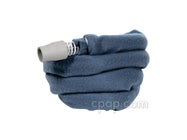
    Companies such as Snugglehose provide a cost effective tubing insulation available in several colors and styles. Not only will the covers reduce or eliminate rainout, they also provide a more personal and less institutionalized appearance. An example of a Snugglehose is shown below.

    Snugglehose

    Why would I want to insulate my CPAP hose?

    Cool air holds less moisture than warm air. If warm air from a heated humidifier cools while moving through the CPAP hose, water will accumulate inside the hose rather than travel to the user. The condensation that occurs inside the CPAP hose is referred to as "rainout."

    Insulating the CPAP hose will help maintain the moisture in the airflow all the way to the nasal membranes.

    How do I clean a CPAP hose?

    Your CPAP hose will last longer if you detach it every morning and hang it to air dry. It should be removed by grasping it on the rubber ends, rather than on the hose itself. A "Hose Quick Connect" is available to help remove and replace the hose more easily.

    Drying the hose each morning will also prevent bacteria from growing in the damp interior and help reduce the possibility of colds and other health issues.

    If you are not drying the hose daily, then be sure to replace the hose very frequently as negative health issues will result!

    How often should I replace my CPAP hose?

    CPAP hoses can last a long time, sometimes up to a year if taken care of properly.

    Signs of wear are dry, cracked places on the inside lining or on the rubber ends; "stretch marks" near the rubber ends; and mineral deposits or mold from water left inside the hose.

    Your CPAP hose will last longer if you detach it every morning and hang it to air dry. It should be removed by grasping it on the rubber ends, rather than on the hose itself. A "Hose Quick Connect" is available to help remove and replace the hose more easily.

    Drying the hose each morning will also prevent bacteria from growing in the damp interior and help reduce the possibility of colds and other health issues.

    If you are not drying the hose daily, then be sure to replace the hose very frequently as negative health issues will result!

    How do I avoid getting tangled in CPAP hoses?

    There are a few ways to keep from getting tangled up in your CPAP tubing. Try running your CPAP hose behind the headboard of your bed. There are also several types of suspension systems we carry here at CPAP.com. You can see the different types of Hose Management Systems under our Comfort & Cleaning section. An example of a hose management system, the CPAP Hose Lift System, is shown below. CPAP Hose Lift System

    What is the purpose of a chinstrap?

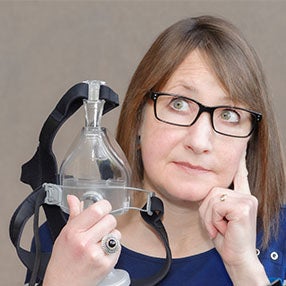
    Nasal delivery devices are the preferred mode of delivering CPAP air. They are smaller, lighter and usually more comfortable, with many styles and sizes to choose from.

    When using a nasal device with a CPAP, it is imperative that the mouth remain closed for the pressure to be maintained and the therapy to be effective. Most people will automatically keep their mouth closed while on CPAP, but some are unable to do so, at least in the beginning of the therapy.

    Use of a chinstrap is the first response to opening the mouth during sleep. It is worn in addition to the CPAP mask to hold the jaw up and help keep the mouth closed.

    Even with the use of a chinstrap, some people are still able to breathe through their teeth and lips. If so, a full face mask is an option worth considering.

    What styles of chinstrap are there?

    A basic chinstrap cups the chin and has narrow straps that connect at the top of the head, usually with Velcro. It works best for those who sleep on their side and who do not open their mouth very much. The straps may fall forward or backward on the head if not held in place by the mask headgear. An example of this type of chinstrap is the Sullivan Chinstrap.Sullivan Chinstrap

    For greater strength, a wider chinstrap is available. The width of the strap is sufficient to cup the chin, and narrow straps are available to attach across the forehead to keep the chinstrap from falling back, as well as across the back of the head to keep it from falling forward. This style of chinstrap is more stable, but it will cover the ears. An example of this type of chinstrap is the Premium Chinstrap.Sullivan Chinstrap

    Another style of chinstrap is a series of straps that cup the chin at a lower angle for greater support, and include the stabilizing straps in the design. An example of this type of chinstrap is the CPAP.com Deluxe Chinstrap.

    CPAP.com Deluxe Chinstrap

    What are the CPAP, BiPAP and Sleep Apnea related billing codes?

    • EO601 RR is CPAP rental
    • E0601 NU is CPAP purchase
    • A7034 is CPAP mask
    • A7032 is CPAP Nasal mask cushion
    • A7033 is CPAP Nasal pillows
    • A7030 is CPAP Full Face mask
    • A7031 is CPAP Full Face mask cushion
    • A7044 is CPAP Oral Interface
    • A7027 is CPAP Hybrid mask
    • A7028 is CPAP Hybrid mask cushion
    • A7029 is CPAP Hybrid mask nasal pillow
    • A7046 is CPAP Humidifier Chamber
    • A7037 is CPAP tubing, long and short hoses
    • A4604 is CPAP Heated tubing
    • A7038 is CPAP disposable filter
    • A7039 is CPAP gross particle (foam) filter
    • A7035 is CPAP headgear
    • A7036 is CPAP chinstrap
    • E0561 NU is CPAP Passover Humidifier
    • E0562 NU is CPAP Heated Humidifier
    • E0470 RR is BiPAP rental
    • E0470 NU is BiPAP purchase
    • E0471 RR is BiPAP-ST rental
    • E0471 NU is BiPAP-ST purchase

    Other CPAP items are listed under E1399, which is miscellaneous.