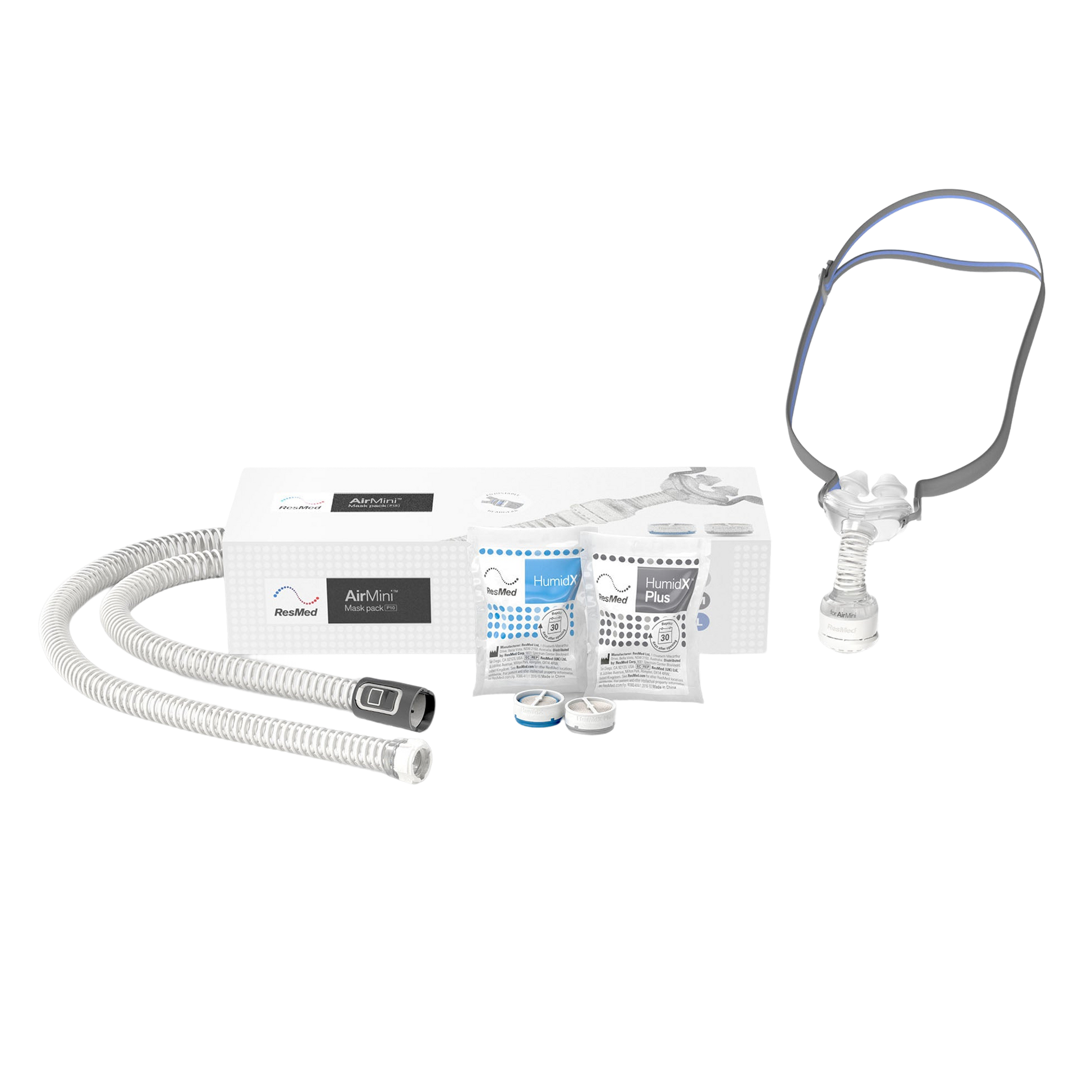
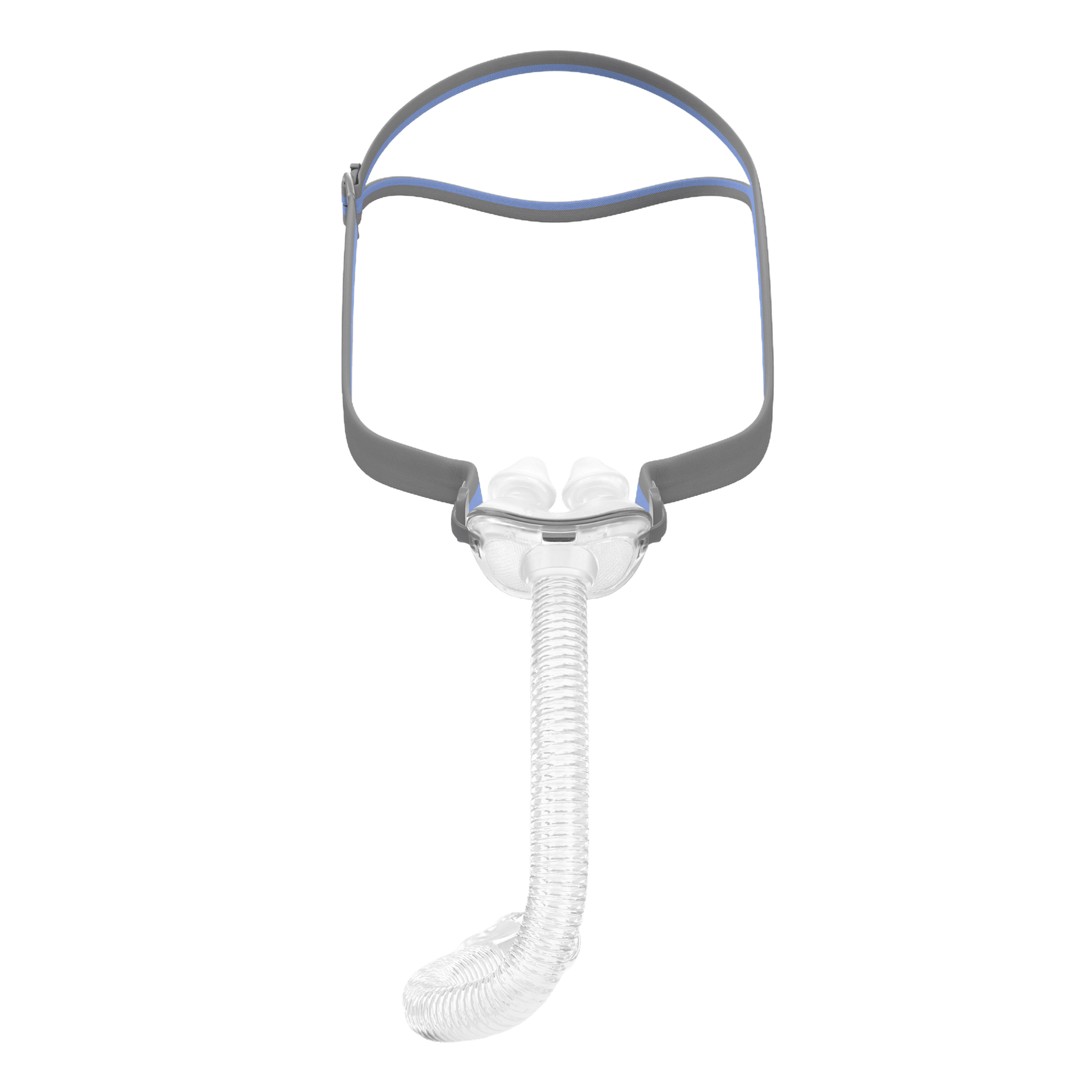
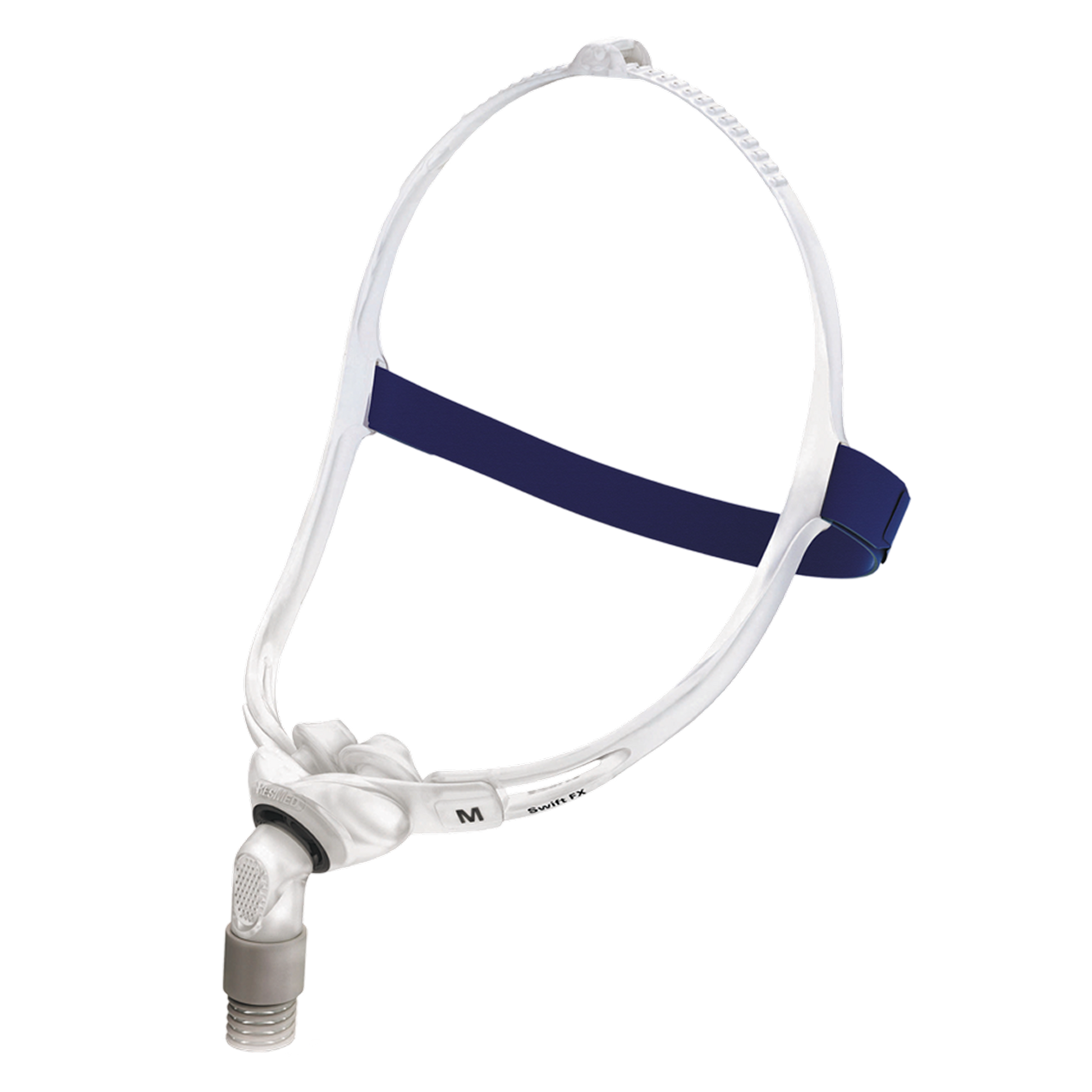
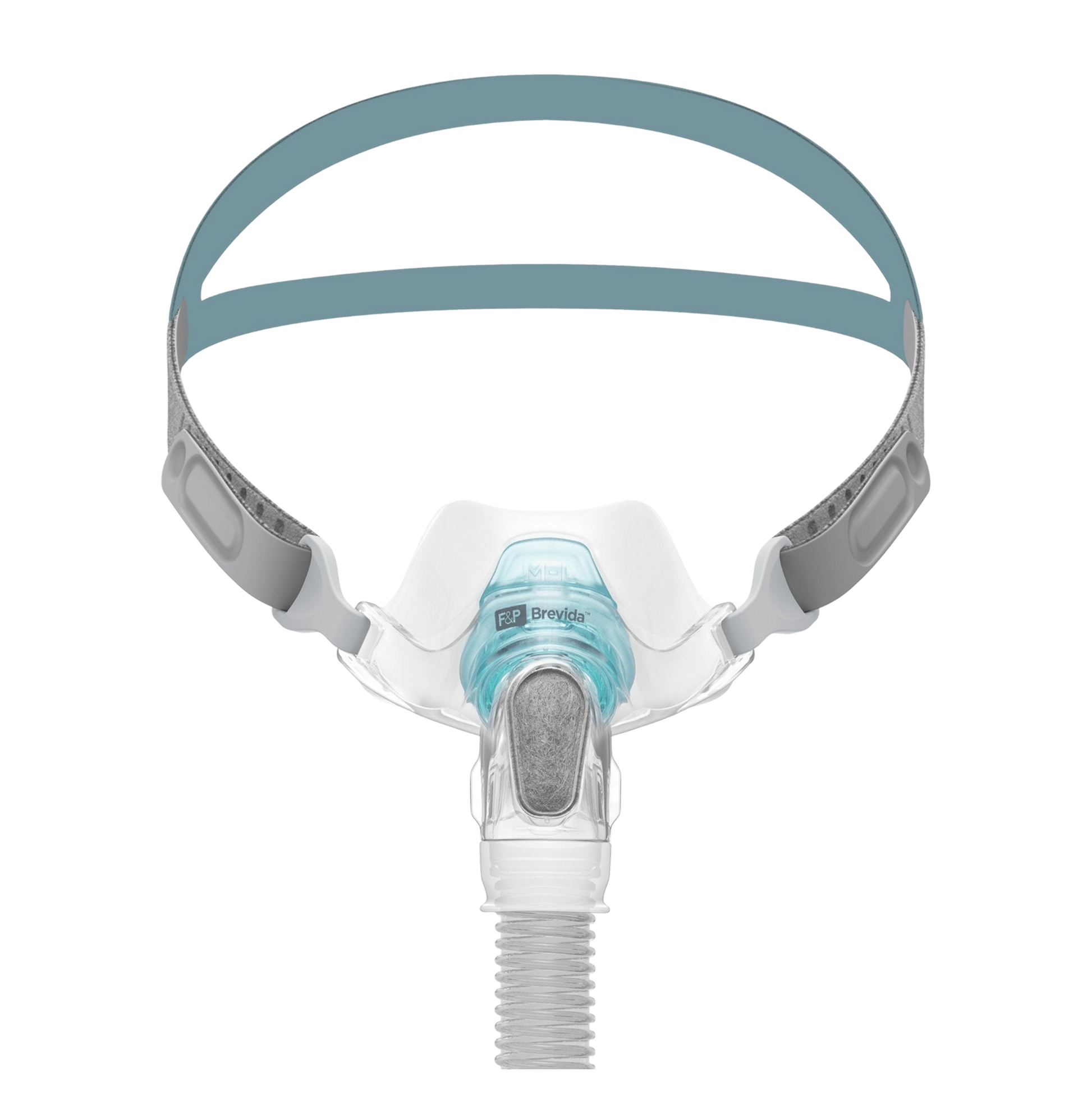
Lightweight, low-profile, and barely there. Nasal pillow masks are built for people who want CPAP therapy to feel as unobtrusive as possible.
What Are Nasal Pillow CPAP Masks?
How the design works: Most nasal pillow masks connect to a short hose, and many route the tubing over the top of your head instead of letting it hang in front of your face; less hose in your way means less tugging and fewer tangles overnight.
Why it feels minimal: Because there's so little material between the mask and your nostrils, pressurized air has a short, direct path to your airway, which is why a lot of people describe it as barely there.
The tradeoff is coverage. Because a nasal pillow mask relies entirely on a snug seal at the nostrils rather than a wider cushion, getting the right size matters more than it does with nasal or full face masks.
How Do Nasal Pillow Masks Compare to Nasal and Full Face CPAP Masks?
All three mask types deliver the same therapy. The difference comes down to your coverage and comfort preference.
Nasal pillow masks are the most minimal of the three. They give you an open line of sight and work best for nose breathers.
Nasal masks cover more of the nose, which adds a bit more stability and can be a better fit if you need slightly higher air pressure.
Full face masks cover both your nose and mouth. They're usually the right call if you breathe through your mouth at night or your pressure needs run higher.
Who Are Nasal Pillow CPAP Masks Best For?
Active and side sleepers. Low-profile, with no bulky cushion to shift out of place, nasal pillow masks tend to hold their seal through a restless night better than larger mask styles.
People with facial hair. Since the mask only touches the base of your nose, a beard or mustache is far less likely to get in the way of a good seal.
Claustrophobia-prone sleepers. Nasal pillow masks use an open design that leaves the mouth and face uncovered, which can make it easier to settle into a mask if larger styles have felt overwhelming.
People prone to skin irritation. With so little surface touching your face, a nasal pillow mask can be worth considering if larger cushions have left you with pressure marks or irritation in the past.
Who they’re not for:
Mouth breathers and people with chronic congestion. Nasal pillow masks only work if you breathe through your nose. If you regularly breathe through your mouth or deal with stuffy nights, a chin strap paired with a nasal mask, or a full face mask instead, is usually the better fit.
Where Can I Find More Guidance on Choosing a CPAP Mask?
Picking a mask isn't a one-size-fits-all decision. The good news? You have help.
Mask fitting quiz. A few quick questions can point you toward the style and size that's best for you.
CPAP Guides. Our award-winning team can give you one-on-one advice on style, sizing, sleep position questions, and more.
60-night mask fit guarantee. Try a new mask risk-free. If it's not the right fit, you can exchange it.
Insurance and prescription support. Insurance forms and prescription renewals aren't anyone's idea of a good time. If you need help with reimbursement or renewing a prescription, our team can walk you through it.