- CPAP Masks
- CPAP Machines
- CPAP Supplies
- CPAP Accessories Home Sleep Test
- Blog
Chat with a 5-star expert now!
Chat with a 5-star expert now!
- Home /
- CPAP Supplies /
- CPAP Humidifiers /
- Heated Humidifiers /
- Fisher & Paykel
Order ships FREE next business day
15 hrs 32 minsPrescription Required for Purchase
Get Your Sleep Back

Setup is easy & takes minutes

Orders ship within hours (M-F)

Resupply items set to autopilot
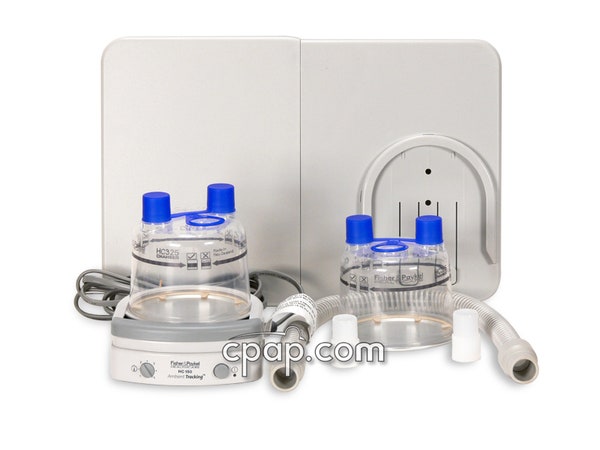
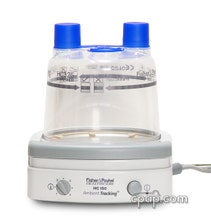
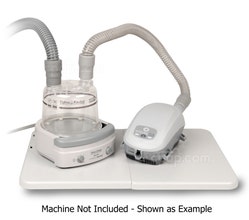
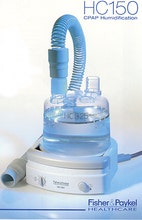
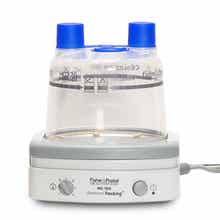


The HC150 Heated Humidifier Kit is Right for You!
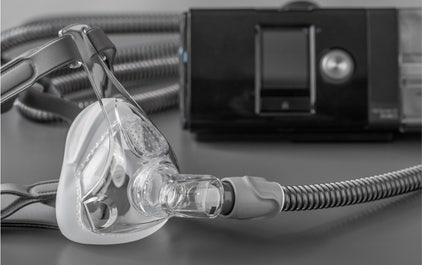
What's included*
- • Humidifier Base
- • Two (2) Chambers
- • Power Cord
- • Stand
- • 18" Humidifier Hose
+ View More
* Does not include select added accessories
Learn More About This Product
In our experience, it is common for CPAP users to report that their therapy is greatly enhanced by the use of a heated humidifier.
There are three types of heated humidifiers:
- Stand Alone Humidifiers
Stand Alone Humidifiers can be used with almost any machine as long as an integrated humidifier is not being used and the machine does NOT have a built in humidifier. The Fisher & Paykel HC150 Heated Humidifier With Hose, 2 Chambers and Stand is a stand alone heated humidifier that includes ambient tracking to keep the humidity consistent independent of room temperature.
- Integrated Humidifiers
Integrated Humidifiers connect directly to the machine the humidifier was made to be used with. This provides the convenience of being able to remove the humidifier from the machine for traveling or other purposes. Here are some of the integrated humidifiers we carry:
PR System One 60 Series Heated Tube Humidifier with Heated Tube
Transcend Heated Humidifier
XT Heated Humidifier
- Built In Humidifiers
Built In Humidifiers are permanently affixed to their machine and cannot be removed. The chamber can still be removed for cleaning, however the heating element is a part of the machine. The advantage of built in humidifiers is they generally take up less space than a machine with an integrated or stand alone humidifier. Here are some machines that have a built in humidifier:
AirSense™ 10 AutoSet CPAP Machine with HumidAir™ Heated Humidifier
ICON Auto CPAP Machine with Built-In Heated Humidifier and ThermoSmart Heated Hose
iCH Auto CPAP Machine with PVA and Built-In Heated Humidifier
+ See More
Air flows from the CPAP through a short hose to the humidifier chamber where the air "passes over" the water to pick up whatever moisture it can. The air then flows into the six foot hose to the mask.
Passover humidifiers may provide sufficient moisture with CPAPs set at lower-end pressures. However, if the moisture is not sufficient there is no way to increase the amount of moisture added. The water is room temperature. In cold climates, the water temperature will drop causing the CPAP air to become very cold, and causing the amount of moisture to be reduced.
An advantage of an integrated humidifier is that it works very closely with the CPAP machine to deliver humidification. Also, an integrated humidifier is a compact unit that uses fewer parts to provide moisture to the user.
A disadvantage of the integrated humidifier is the user will receive less moisture when it is used with a passover humidifier. The smaller surface area effects the amount of moisture produced. Also, a integrated humidifier will only function with the CPAP for which it was designed.
You can see if your machine has an integrated humidifier option by reviewing our Compare Charts.
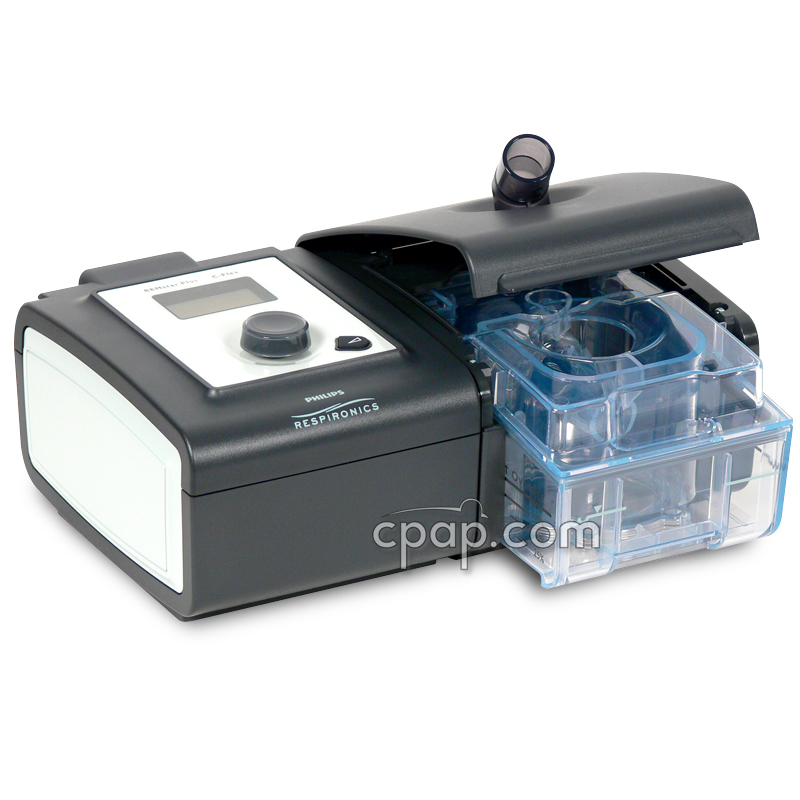
An example of an integrated humidifier is the PR System One Heated Humidifier as seen below attached to a machine in the PR System One line.
Here are some of the integrated humidifiers we carry:
DreamStation Heated Humidifier
Transcend Heated Humidifier
IntelliPAP 2 Heated Humidifier with Pulse Dose Humidification
PR System One 60 Series Heated Tube Humidifier with Heated Tube
The advantage of a "built-in" humidifier is its compact shape, which operates on fewer parts. This integrated design helps to ensure optimum moisturized comfort and effectiveness when CPAP therapy and humidification are used together. Also, it allows an option for the humidification to be turned off while the CPAP is blowing.
A disadvantage is that a built in humidifier may produce less moisture if used as passover because the surface area is typically smaller. Also, since the humidifier is "built in" to the machine, detaching it is not an option. This can be an issue for frequent travelers. Lastly, if the machine or humidifier stops working, the entire unit must be sent in for repair or replacement, not just the component that failed.
An example of a machine with a built in humidifier is the ICON Auto CPAP Machine with Built In Heated Humidifier and SensAwake as seen below.
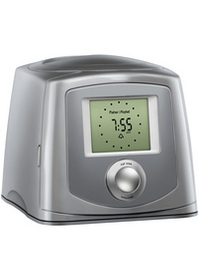
Here are some other machines we carry with built-in humidifiers:
AirSense™ 10 CPAP Machine with HumidAir™ Heated Humidifier
AirSense™ 10 AutoSet CPAP Machine with HumidAir™ Heated Humidifier
iCH Auto CPAP Machine with PVA and Built-In Heated Humidifier
+ See More
The advantage of a stand alone humidifier is the fact that it may be used with any CPAP machine.
The main disadvantages are that the size is often larger than either a "built in" or integrated humidifier and that a short hose is needed to connect it to the CPAP machine.
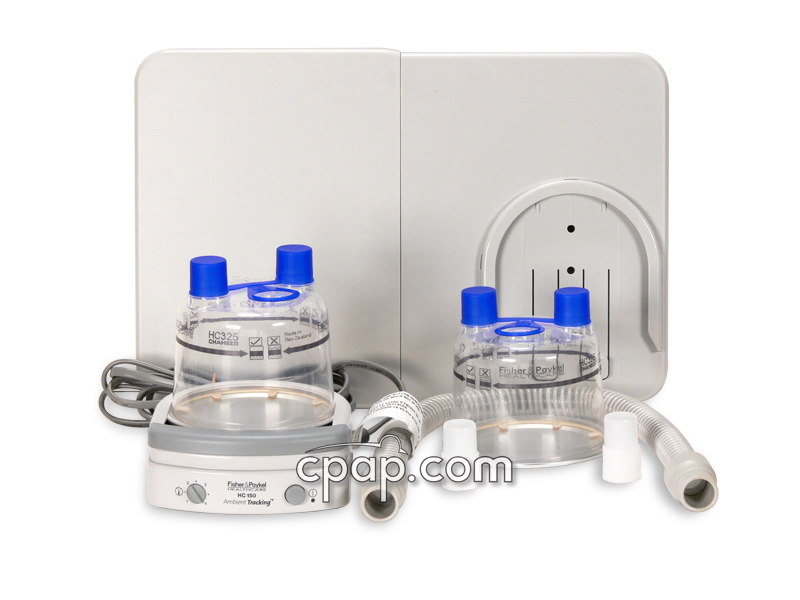
An example of a stand alone humidifier is the Fisher & Paykel HC150 Heated Humidifier as seen below.
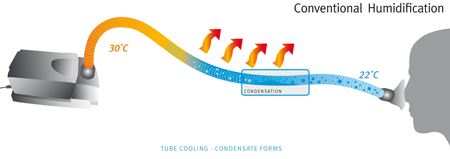
The image below from Fisher & Paykel explains how rainout is formed. Warm, moist air leaves the heated humidifier and travels through the CPAP tube. As air flows through the tube, the temperature of the room causes the tube to cool. As the tube cools, the air inside releases its moisture, and creates condensation in the hose.
Solutions to rainout include:
- Raise the temperature of your bedroom.
- Keep your CPAP machine at the same level as your bed.
- Insulate your tubing with a hose cover like Snugglehose.
- Reduce the temperature setting on your heated humidifier.
- Purchase a CPAP machine with a rainout reduction comfort feature.
- Some machine systems offer a compatible heated CPAP hose which maintains the temperature from the machine all the way to the mask, reducing the occurrence of rainout. The list of available heated hoses can be found here: Hoses With Heating Coils.
- If your machines uses a standard hose, consider the Hybernite Heated Rainout Control System.
To care for your humidifier simply empty and clean the water tank each morning. Only distilled water should be used in the humidifier to avoid mineral deposit build up. 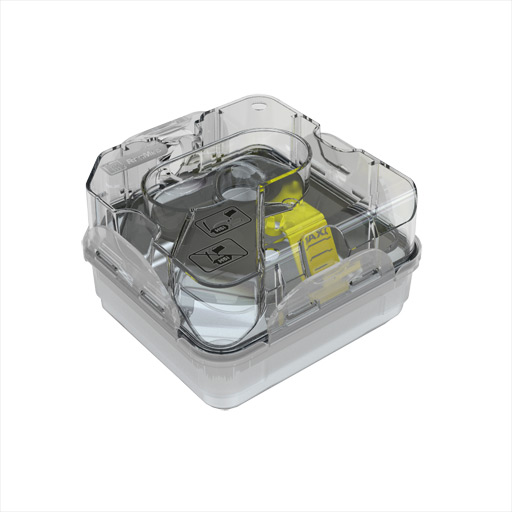
Here are some items that can help with caring for your humidifier:
CleanSmart CPAP Disinfectant Spray
Control III Disinfectant CPAP Cleaning Solution - 16 oz Concentrate
Control III Disinfectant CPAP Cleaning Solution - Home Care Kit
- One of the following words or phrases: "CPAP Humidifier", "Humidifier", "HH", "CPAP Supplies", "CPAP Mask", "CPAP", "Continuous Positive Airway Pressure", "APAP", "AutoPAP", "AutoSet", "Auto CPAP", "Auto Adjusting CPAP", "Self Adjusting CPAP", "BiPAP", "BiLevel", "VPAP", "BiPAP Auto", "BiPAP ST", "Synchrony ST", "VPAP ST"
- Your physician's contact information
- Your physician's signature
- The patient's full name
Here are some of our top selling humidifiers:
PR System One 60 Series Heated Tube Humidifier with Heated Tube
Transcend Heated Humidifier
XT Heated Humidifier
+ See More
Yes. Federal law requires we have a valid prescription on file before we ship your mask, machine, humidifier, or EPAP therapy, including Provent and Bongo RX. You will also need a prescription to purchase the Nightbalance POSA device.
We provide many easy ways to get your prescription:
- We can request your prescription for you! When you checkout, just let us know you would like us to request your prescription, or you can log into your account to have us request your prescription.
- Fax your prescription to our toll-free fax number: 866.353.2727, or our international fax number: 713.541.7377
- Email your prescription to cpap@cpap.com
- Upload your prescription in your account, under the Prescriptions Section
- Ask your doctor to fill out our prescription form. We have both a standard prescription form and an EPAP prescription form.
For more information on prescriptions, please see our Prescription Section of the Learning Center.
Frequently Bought Together
Oracle HC452 Oral CPAP Mask
Transcend Micro PowerAway™ Battery
Transcend Micro Auto Travel CPAP Machine
Luna TravelPAP Travel CPAP Machine
DreamStation Go Overnight Battery
CPAP.com 100% Price Protection Guarantee
When you shop with us, we want you to be confident that you are receiving the best available price. If this items goes on sale or you spot an online or retail competitor with a lower price within seven days of your purchase, let us know, and we will credit you the difference.
"Super helpful, fast shipping, friendly assistance, great selection, I love this company."
- Verified Customer, 10/25/22
(122)
Read Reviews
Need a personal touch?

Chat with CPAP
Questions about a product or an existing order? Start a chat and let us help you out.
Start a chat



Customer Reviews
See what other customers are saying.
HC-150
All good.
Good humidifier
Works, but not the greatest quality
Adds humidity to my travel CPAP
Not travel friendly.
Hard to turn off
Customers Also Viewed
HC300 Extended Life Humidifier Chamber for HC100/150 Humidifiers
HC325 Replacement Water Chamber for HC100/150 Humidifiers
Fisher & Paykel Humidification Starter Kit 900HC105
HC360 Extended Life Humidifier Chamber for SleepStyle 600 Series CPAP Machines
XT Heated Humidifier
HumidAire H4i™ Heated Humidifier
Water Chamber for Transcend Heated Humidifier
H4i™ Water Chamber Upgrade Kit for HumidAire 3i™ Heated Humidifiers
Water Chamber for H4i™ Heated Humidifier
S9™ Series H5i™ Heated Humidifier with Climate Control
Dishwasher Safe Water Chamber for H4i™ Heated Humidifier