






💡 Key Takeaways
- Nasal Pillow Masks: Best for minimal facial contact and those who can breathe solely through their nose. Not ideal for higher pressure settings or chronic nasal congestion.
- Nasal Masks: Offers more stability than nasal pillows and suitable for a wide range of pressure settings. May cause discomfort at the nasal bridge.
- Full Face Masks: A go-to option for mouth breathers or those with nasal congestion. While stable, they can be bulkier and more expensive.
- Decision Factors: Your pressure setting, breathing style, and sleeping position are crucial considerations in mask selection.
- Explore Alternatives: Besides the main types, there are also Nasal Prong, Hybrid, and Total Face masks for specific needs. Nasal cradle and minimal-contact full face masks have also become popular options recently.
With so many different types of CPAP masks available for those diagnosed with obstructive sleep apnea (OSA), it can be overwhelming trying to decide which one is best for you – especially if this is your first time buying a CPAP mask.
Finding a mask that fits your needs, favored sleeping position, and lifestyle is essential for maintaining CPAP therapy compliance. A 2016 study published in The Clinical Respiratory Journal found that people who used a mask that fit better experienced fewer leaks, less discomfort, and were able to tolerate higher therapy pressures.
In line with these findings, we created this guide to serve as a first step along the path to choosing the best CPAP mask for your unique needs.
So, what are the main CPAP mask types? They are:
- Nasal Pillow Masks
- Nasal Masks
- Full Face Masks
In this article, we’ll break down the features, benefits, and drawbacks of these masks while outlining for whom they’re ideal and recommending some of our favorites in each category. There are some other, alternative mask styles that we’ll also mention later down the line, but for now, let’s dive into the differences between the types of CPAP masks.
The Three Main CPAP Mask Types
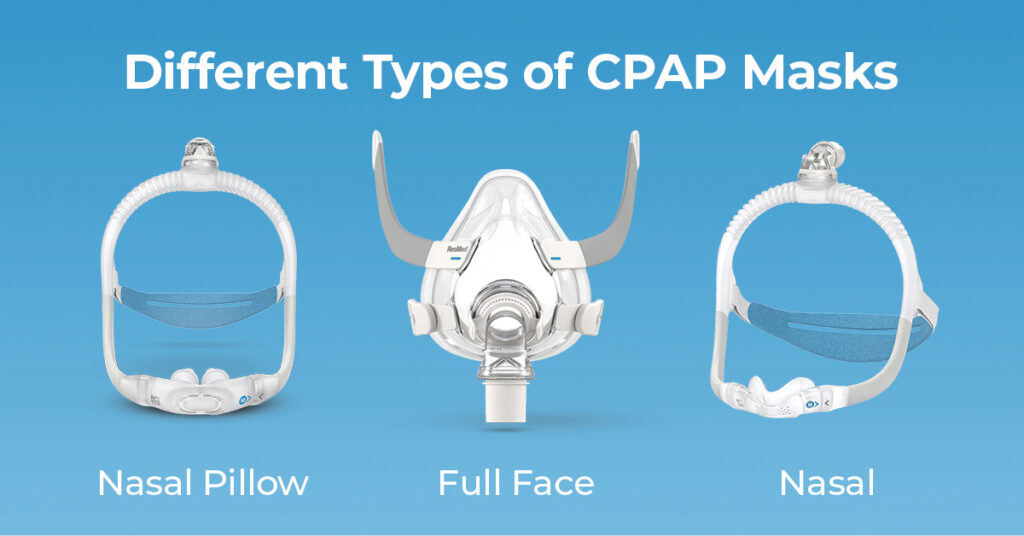
To briefly preface this section, we want you to know that the best way to choose a CPAP mask is to start with whatever makes the least amount of contact with your face, then work toward larger masks and mask styles as needed.
For your convenience, here is a chart to briefly illustrate important differences between the three main types of CPAP masks:
| Nasal Pillow Masks | Nasal Masks | Full Face Masks | |
|---|---|---|---|
| Contact Area | Nasal pillow masks rest under the nose and seal at the base of or just inside the nostril. | Nasal masks encompass the nose entirely or rest beneath it, sealing at the base of the nostril. | Full face masks typically encompass the nose and mouth. Some designs cover only the mouth and rest under the nose, sealing at the base of the nostril. |
| Pros | Lightweight, minimal contact, easy to change sleeping positions, easily fits most wearers, and doesn’t trigger claustrophobic feelings. | Smaller than full face masks, manages higher pressure settings well, fits the majority of wearers well, are more stable and secure than nasal pillows, and different styles exist for every sleeping position. | Delivers therapy air to the nose and mouth for maximum effectiveness, very stable and secure for back sleepers, and modern designs accommodate side and active sleepers. |
| Drawbacks | Won’t work if you struggle with nose breathing or have chronic congestion/a deviated septum. Can irritate the inside of the nostrils. | Won’t work if you struggle with nose breathing or have chronic congestion/a deviated septum. Traditional designs can trigger claustrophobic feelings and cause nasal soreness. | Bulkier, more claustrophobic, and typically more expensive as well. Not ideal for beards/facial hair and may cause soreness of/around the nose. |
As a rule of thumb, the more surface area your mask requires to make a good seal, the more potential you have for a leaky mask, resulting in common CPAP side effects like dry mouth, dry eyes, and residual tiredness from ineffective therapy. For this reason, we’ll be starting with the least invasive option: nasal pillow masks.
Nasal Pillow Masks

| Pros | Cons |
|---|---|
| Lightweight and Unobtrusive | Not Ideal for Higher Pressures (15-20 cmH2O) |
| Lowest Amount of Facial Contact | Not Ideal for Deviated Septums, Chronic Nasal Congestion, or People Who Need Their Mouth to Breathe |
| Clear Field of Vision; Non-Claustrophobic | May Irritate the Inside of the Nostrils |
| Easy to Travel With | Not Always Stable/Secure |
Nasal Pillow CPAP Masks are Ideal For:
- Pressure settings under 15 cmH2O
- Anyone that can reliably breathe through their nose
- People who experience claustrophobia
- Any sleeping style
- Beards/facial hair
Nasal pillow CPAP masks create a seal at the base of the nostril where the cushion sits. This is the least invasive style of CPAP mask and provides a clear field of vision, ideal for reading or watching TV. For men that have facial hair, the nasal pillow mask will be a good option. Nasal pillow mask wearers typically enjoy higher levels of compliance thanks to a more comfortable fit made possible by the less-invasive design of nasal pillows.
Some nasal pillow masks feature top-of-head hose connections that benefit active sleepers, as well, so as long as you can reliably breathe through your nose and don’t have a high pressure setting, you can probably find a nasal pillow mask that works for your sleeping style.
For some people, however, a nasal pillow won’t be the best option. You should avoid nasal pillows if you:
- Have a high pressure setting (15+ cmH2O)
- Have a deviated septum
- Experience chronic nasal congestion
- Have regular difficulty breathing through your nose
Possibly the most common shortcoming of nasal pillow masks is that they can lead to accidental mouth breathing, leaving you with dryness in the mouth and throat. If this is your experience with nasal pillow masks, you may need to consider wearing yours with a chinstrap or, alternatively, trying a full face mask.
Some of our favorite nasal pillow masks include:
- ResMed AirFit P10 (Great All-Around)
- ResMed AirFit P30i or DreamWear Gel Nasal Pillow Mask (Great for Active Sleepers)
- ResMed Swift FX (Most Secure Fit)
Related Reading: Discover Best Nasal Pillow CPAP Masks
Nasal Masks
| Pros | Cons |
|---|---|
| Stable and Secure | Typically Obstruct Your Line of Sight |
| Smaller & Lighter Than Full Face Masks | Not Ideal for Deviated Septums, Chronic Nasal Congestion, or People Who Need Their Mouth to Breathe |
| More Comfortable at Higher Pressure Than Nasal Pillow Masks | May Irritate or Cause Soreness at the Nasal Bridge |
| Good Variety of Cushion Shapes and Sizes | May Put Unwanted Pressure on the Sinuses |
Nasal CPAP Masks are Ideal For:
- Any pressure settings
- Anyone that can reliably breathe through only their nose
- People who don’t need their mouth to breathe
- Any sleeping style
- Beards/facial hair
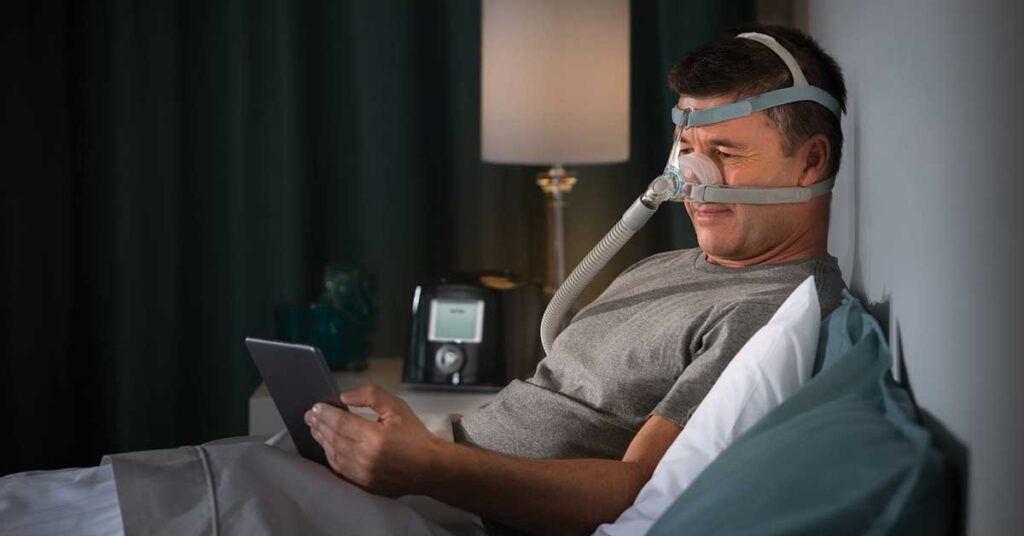
Traditionally, a nasal CPAP mask sits on the bridge of the nose, usually covering the entire nose or the bottom half of the nose. The nasal mask is commonly held in place by four-point headgear that attaches to the frame. Irritation with a nasal mask can occur on the bridge of the nose where the mask sits.
However, nasal cradle CPAP masks have become more popular in recent years because of their design which rests more comfortably under the nose without entering the nostrils as nasal pillows do. Nasal cradle masks also have open sightlines, making them a good fit for people who experience claustrophobia. Nasal cradle masks often have top-of-head hose connections as well, making them a great fit for active sleepers, too.
Similarly to nasal pillows, nasal masks are not recommended for those who:
- Have a deviated septum
- Experience chronic nasal congestion
- Have regular difficulty breathing through your nose
Nasal masks are incredibly popular due to their more minimalistic nature, but accidental mouth breathing can lead to dryness of the mouth and throat. This can easily be combated by using a chin strap to hold the mouth shut during sleep, or you could opt to use a chinstrap instead.
Some of our favorite nasal CPAP masks include:
- ResMed AirFit N20 (Great All-Around)
- ResMed AirTouch N20 (Most Comfortable)
- ResMed AirFit N30i or DreamWear Nasal Mask (Great for Active Sleepers, Non-Claustrophobic)
- ComfortGel Blue Nasal CPAP Mask (Most Secure Fit)
If you’re interested in nasal CPAP masks, we’ll show you just what to look for as well as what’s popular right now in How to Find the Best Nasal CPAP Mask.
Full Face Mask
| Pros | Cons |
|---|---|
| The Most Stable and Secure Mask Type | Typically Obstructs Your Line of Sight |
| The Most Comfortable Mask Type for High Pressure Settings | Not Ideal for Those With Facial Hair |
| Come in Designs Good for Every Sleeping Style | May Irritate or Cause Soreness at the Nasal Bridge |
| Reliable Therapy Year Round (Doesn’t Matter if Your Nose is Congested) | The Biggest & Bulkiest Mask Type |
| Most Durable Mask Type | Not Ideal for Stomach Sleepers |
Full Face CPAP Masks are Ideal For:
- Any pressure settings
- Anyone that struggles to reliably breathe through only their nose
- Anyone who needs their mouth to breathe
- Back sleepers, though side-sleeper and active-sleeper-friendly designs exist
- People who have tried a chinstrap with another mask style and didn’t like it
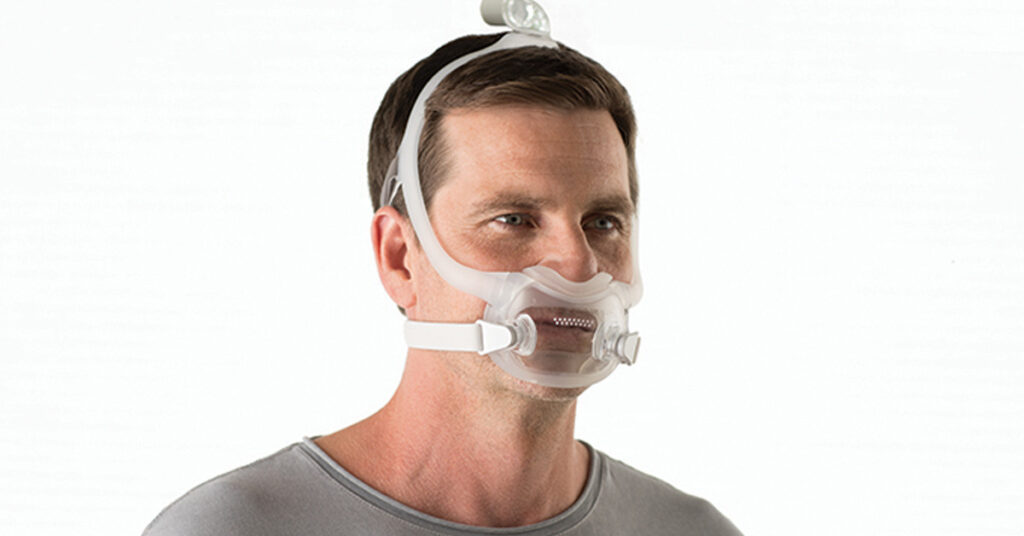
Traditionally-styled Full Face CPAP masks seal around your nose and mouth, with cushions commonly in the shape of a triangle, and are held in place by four-point headgear; sometimes, this design incorporates a forehead support bar and pad for extra stability. However, more modern designs might feature a hybrid cushion that encompasses the mouth but only rests under the nose with a more comfortable nasal cradle cushion.
Regardless of style, full face masks are great for people who breathe through their mouth and don’t want to use a nasal mask with a chinstrap. Bulkier designs of the past have made way for more modern takes that feature open sightlines, top-of-head hose connections, and more lightweight frames that help reduce feelings of claustrophobia.
While full face CPAP masks should really only be considered as a last resort for people without chronic nasal congestion or obstructions, that doesn’t mean they’re bad or uncomfortable. In fact, you’ll find countless testimonials all over the internet from people who struggled with other mask types but finally found a full face mask that was the perfect fit for their needs.
That said, the researchers behind this 2014 meta-analysis determined that full face masks can lead to lower levels of compliance compared with nasal or nasal pillow masks, so it’s important that you try other mask options first if you’re able to.
Some of our favorite full face CPAP masks include:
- ResMed AirFit F20 (Great All-Around)
- ResMed AirTouch F20 (Most Comfortable)
- PR Amara View or F&P Evora Full Face (Open Sightlines, Good for Claustrophobia, Accommodates Eyeglasses)
- ResMed AirFit F30i or PR DreamWear Full Face (Great for Active Sleepers)
- ResMed Mirage Quattro (Secure and Highly Adjustable)
Related Reading: Discover Best Full Face CPAP Masks
Anatomy of a Typical Mask
Most CPAP masks have three main components:
- Mask Frame: The part that holds your cushion and attaches to your headgear. Mask frames are typically made of hard plastic but are sometimes constructed with pliable silicone or soft fabric.
- Mask Headgear: Secures the mask to your head. CPAP headgear can be simple and straightforward or highly adjustable depending on the mask/style. The headgear attaches to the mask frame using magnets, plastic clips, or velcro-style fasteners.
- Mask Cushion/Nasal Pillows: The part that touches your face to create a seal. Most cushions/nasal pillows are made of silicone, though some masks offer memory foam, gel, or cloth cushions to help those with sensitive skin.
Some masks also feature a short tube—usually 6-10 inches long—extruding from the front of the mask frame. While not mandatory for every mask, this short tube connects to your main CPAP tube and provides a bit more flexibility and movement range.
More CPAP Mask Types Worth Considering
While the vast majority of sleep apnea patients will choose between the three mask types we just covered, there are multiple more niche mask styles that are worth considering if you don’t find your fit within the three main styles. These other mask styles include:
Nasal Prong Mask
Nasal Prong masks seal and deliver air inside the openings of your nose. Nasal Prong masks are similar to nasal pillows, but the prong will rest deeper inside the nostril and inflate slightly against the walls of the nostril to create a seal with pressure. This is different from a nasal pillow mask which creates a seal by resting against the nostril opening.
Nasal Prong CPAP masks are held in place by a headgear that is worn on the top of the head. To prevent dryness and make Sleep Apnea therapy more tolerable, it is highly recommended to use heated humidification.
Nasal masks, nasal pillow masks, and nasal prong masks only deliver air to the nose. A common problem with these masks is that the mouth falls open during the night, which can affect the quality of your therapy. If you find that you’re constantly waking up with a dry mouth with a nasal-style mask, a chinstrap may be beneficial.
Hybrid Mask
Hybrid full face masks provide the functionality of a full face mask with much less bulk. This CPAP mask design combines the seal of a nasal pillow mask, providing airflow to the nasal passages, with the full coverage of an oral mask. The clear field of vision is why many people choose this mask style, and why hybrid masks are growing in popularity.
There is no forehead support required, giving the wearer a clear field of vision. If your nose isn’t familiar with nasal pillows then you may experience some irritation at the opening of the nasal passages until the adjustment period wears off.
The hybrid mask is a great way to get the seal and comfort of a nasal pillow mask while also ensuring you don’t need a chin strap if your mouth falls open while you sleep.
Oral Mask
Oral CPAP masks use an oval-shaped cushion to seal around the mouth and deliver air through two inlets inside the mask. An inside flap rests between your teeth and lips while a second flap curls over your lips to keep the mask stable.
This design is great for users who experience frequent nasal congestion but those without congestion find that the air that is blown in their mouth sometimes escapes through the nose and dries up their airway.
An oral mask with a mouthpiece design offers unparalleled stability and security compared to any other mask, but wearers may find it to be more intrusive on their sleeping experience, too.
Total Face CPAP Mask
Total Face CPAP masks seal in a large oval around the entire face to encompass the nose, mouth, and eyes and are held in place by four-point headgear. Some people leak CPAP air through the corners of their eyes when they receive Sleep Apnea treatment. If this happens then other types of masks will not function properly and a total face mask should be considered.
Other special circumstances could be if a patient has a facial condition that prevents the use of a nasal or full face mask. Like a full face mask, a total face mask equalizes the pressure so the air treatment is even, but this mask encompasses the entire face and will cover any area where air might escape, such as the eyes.
Here’s a video recap of the different CPAP masks discussed:
How to Choose a CPAP Mask
When it comes to choosing the right CPAP mask, there are many individual factors and preferences to consider, including:
- Your breathing style (nose only, mouth only, or combo breathing)
- Your favored sleeping position
- Skin sensitivities
- Claustrophobic tendencies
- Facial hair
- Bedtime routines (do you like to watch T.V., scroll on your phone, or read before bed?)
- Arthritis
- Magnetic sensitivity (i.e. pacemakers, metallic implants, shrapnel)
When deciding on a CPAP mask, the way you breathe is the absolute most important consideration. If you can’t reliably breathe through your nose, you probably shouldn’t start with a nasal pillow or nasal mask. Instead, skip straight to a full face mask.
The second most important consideration is your sleeping style, which will inform the types of features you should be looking for in a CPAP mask. Here’s a table to help break down different breathing needs and sleeping positions and the mask features that benefit them:
| Need/Preference | Features/Styles to Look For |
|---|---|
| Nose-Only Breathing | Nasal pillows and nasal masks |
| Mouth-Only Breathing | Full face masks and oral masks |
| Combo Breathing | Full face masks |
| Active Sleeping | Masks with top-of-head hose connections and low-profile designs that don’t stick out far. |
| Side Sleeping | Masks with swiveling hose connections, top-of-head hose connections, and low-profile designs. |
| Back Sleeping | Essentially any mask works, but swiveling hose connections reduce tube drag. |
| Stomach Sleeping | Nasal pillows or masks with low profiles and top-of-head hose connections. |
| Claustrophobia/Eyeglasses | Masks with top-of-head hose connections offer open sightlines. Also look for masks without a forehead support bar. |
| Sensitive Skin | Memory foam or cloth mask cushions, and masks that make minimal contact. |
| Arthritis | Nasal pillow masks or those with magnetic clips and minimal parts. Those with arthritis may find Fisher & Paykel masks to be easier to take apart and assemble. |
| Pacemaker/Magnetically Sensitive Implant | Avoid masks with magnetic headgear clips and seek out those with plastic clips or velcro-style fasteners. |
| Beards/Facial Hair | Minimal surface area like nasal pillows, nasal cradle masks, and nasal masks. Memory foam or gel cushions may work better for beards, though this tends to be quite subjective. If you need a full face mask, look for hybrid nasal cradles that rest under the nose. |
If you’re having trouble finding the right CPAP mask, try our CPAP mask finder tool to help narrow down your choices!
Frequently Asked Questions About CPAP Mask Types
Do I Need a Prescription to Buy CPAP Masks?
Yes, you need a prescription to purchase a complete CPAP mask in the United States. CPAP mask kits, which do not include headgear, do not require a prescription.
Are All CPAP Masks Compatible With All CPAP Machines?
Unless you own a ResMed AirMini, all CPAP masks are natively compatible with your CPAP machine. The AirMini uses a specialized tube connection that is only compatible with a handful of CPAP masks, though the Zephair Hose Adapter allows you to use any standard tube and mask combo with the AirMini.
What Are the Different Types of ResMed CPAP Masks?
The different ResMed mask types are nasal pillow, nasal, full face, hybrid, and pediatric. ResMed is a modern mask manufacturer with a range of masks in both traditional styles as well as modern styles with more open sightlines, swiveling hose connections, and magnetic headgear clips. ResMed is most known for its AirFit CPAP masks.
What Are the Different Types of Philips Respironics CPAP Masks?
The different Respironics mask types are nasal pillow, nasal, full face, total face, and pediatric. Like ResMed, Philips Respironics offers many mask styles with modern design features and is most known for its DreamWear CPAP masks.
How Do I Clean My CPAP Mask?
When cleaning your CPAP mask, you should always disassemble it to the smallest pieces, hand wash those pieces with warm soapy water, then leave them to air dry out of direct sunlight. You can also use vinegar or CPAP mask wipes, and there are even a handful of CPAP cleaning machines that can help to ease the load when it comes to keeping your equipment clean.
Final Thoughts
While there are many factors to consider when navigating the different types of CPAP masks, we hope that this guide has helped you better understand the types of masks and mask features you should look for!
Remember to always choose a mask based on your breathing style and sleeping position preference first, then consider your other needs like skin sensitivity, claustrophobic tendencies, and medical implants you may need to keep in mind.
If you need more personalized help in choosing the right CPAP mask, don’t hesitate to reach out to our expert customer service team, who is eager to help you reclaim restful sleep and get back to waking up energized and enjoying life!

19 Responses
I need Oxígeno almost all day, the new mask eliminated and recommend an little device to connect under them. I can’t an Adecuade Oxígeno saturation with this method. What’s I will do?
Would like to use nasal pillow type but found it difficult to exhale against pressure. Using nasal mask past 10 yrs. I put up with it becuz of benefits of sleeping. Any suggestions?
You’ve got to go with a mask that makes the most sense for you, in terms of how you sleep. A nasal mask isn’t necessarily any better or worse than a nasal pillow or full face. It’s simply designed to fit a different set of needs. So if the nasal mask is giving you solid benefits, then you should probably stick with it.
We hate humidifiers and anything that touches the brows. We also don’t like nasal pillows.
We have been using cpap for 20 years. Have tried it all. While we do have sinus infections, the cause is not the cpap but the changing of environment constantly. We are truckdrivers.
Best thing we ever did was get away from nasal pillows and buy a soclean machine.
I use the airfit p10. Almost perfect. If the designers are listening please improve it by making the hose connection below the nasal pillows rotate.
That would be a nice feature! Good idea!
I sleep with a face mask and have tried other masks. no matter what mask I use they make bag under my eyes. WHY? what can I do about that?
Why is it not recommended to use a full face mask if you have a hiatal hernia? I found this contraindication in the user manual for a full face mask I received.
Hi Albert, unfortunately I am not certain. My suggestion would be for you to speak with your doctor, or even the manufacturer of the mask that has the contraindication in their user manual for clarification as to why it is best not to use the mask.
I am very sorry that I do not have the answer to your question, but even after researching your question, I was not able to locate an absolute response.
I wish you the best!
Wondering which mask would work best for someone who has no upper teeth.
Hi Jimmy, as with any mask selection, everyone’s face structure is different. Not having upper teeth is usually not the deciding factor on the mask that would fit you best. Are you experiencing any type of issues with your current mask? Which mask are you currently using? As long as it isn’t a mask with a mouth piece, for example, the Tap Pap, you should be able to wear whichever mask you choose.
If you would like assistance with selecting a mask, please feel free to reach us at: 1-800-356-5221.
Enjoy your day
What’s the difference between a woman’s full face mask and a man’s full face mask, and is it better for a women to use the full face mask for women or the male full face mask?
Hi Winnie, the masks are the same except for the women, it may come with an extra small cushion, or headgear and the color of the headgear is usually purple, or pink. That’s it, no other difference. Most women, elect to go with the regular mask.
For further questions, or concerns, please feel free to reach us at: 1-800-356-5221, or you may e-mail us at: cpap@cpap.com.
Have a terrific day!
I use the Amara View full face cushion and I like it except for one thing. After using it for three to four days the lip area directly below my nose is raw. I then have to stop using the mask until it heals. Any thoughts on how to prevent the rawness?
Hi Mike,
I’m sorry about the tough time your having with your mask. Are you using the correct size mask/headgear? If you have to pull your headgear straps too tight to get and keep a good seal, skin bruising, rash, or sores can develop.
To avoid over tightening your mask, you should work clockwise around the mask, making small adjustments to the headgear, until the headgear is securely in place but not overly tight. You should avoid pulling too much on one side of the mask than on the other. Also you can try a mask liner such as the one in the link below.
https://www.cpap.com/productpage/remzzzs-full-face-cpap-mask-liners
Keep in mind, not all masks will fit every person. If the bruising continues, you should consider switching to a different mask that may be more comfortable.
For further questions, or concerns, please reach us at: 1-800-356-5221, or you may e-mail us at: cpap@cpap.com.
Best Wishes!
PM
Is it possible to obtain a custom CPAP mask? If so, where? I breathe through my mouth while I sleep, so I need a mask that covers my mouth and nose. I currently use Mirage Liberty small, which includes a mask to cover my mouth and attached nasal pillows. It works effectively, BUT my dentist says I am in danger of losing my bottom teeth because of gum problems. And the mask ends and puts pressure between my mouth and chin, right at the base of my bottom teeth. The dentist made me a guard to stabilize my bottom teeth at night. However, I would really like to have a mask that goes under my chin. I finally obtained one from Fisher & Paykel, but it was proportioned for a shorter, wider face than mine. It did not fit properly. How can I get one proportioned for my long, thin face?
Hi Margaret,
I’m sorry to hear you’re having some trouble finding a mask that fits you properly. You may be able to get a custom fit mask, but CPAP.com, doesn’t have this option available.
Please see the link below that may be able to assist you. Please keep in mind that CPAP.com, has no affiliation with this company.
https://www.sleepglad.com/index.html
For further questions, or concerns, please feel free to reach us at: 1-800-356-5221, or you may e-mail us at: cpap@cpap.com.
Best Wishes
I was wondering if there is a difference between ladies full face masks and men’s full face masks
Would rotating types of mask types relieve or stop the facial marks? That is if your therapy results remained therapeutic.